
Building and Construction Insurance in Australia: What Subcontractors Need Before Starting a Project
Introduction: Why Subcontractors Need the Right Insurance Before Starting Work
Working as a subcontractor in the Australian construction industry can provide excellent business opportunities. Electricians, plumbers, carpenters, painters, concreters, roofers and specialist tradespeople regularly work on residential, commercial and infrastructure projects.
However, securing a construction contract involves more than agreeing on a price and completing the work. Subcontractors are also expected to understand their contractual responsibilities, manage workplace risks and maintain appropriate insurance.
A principal contractor may request proof of public liability insurance, workers compensation arrangements, professional indemnity insurance or cover for tools and equipment before allowing a subcontractor to start work.
Building and construction insurance helps contractors and subcontractors manage financial risks associated with property damage, third-party injury, construction work and professional responsibilities. The appropriate cover depends on the type of work, business structure, contractual obligations and applicable state or territory requirements.
For example, an electrical subcontractor working on a commercial development may need public liability insurance for third-party property damage, workers compensation for eligible employees and separate protection for expensive tools and equipment.
A subcontractor providing design or engineering services may also need professional indemnity insurance.
The important point is that no single insurance policy automatically covers every construction-related risk.
In this guide, we explain the different types of construction insurance available in Australia, what subcontractors should check before accepting a project and how to avoid common insurance gaps.
1. Why Do Australian Construction Subcontractors Need Insurance?
Construction projects involve several businesses working together under a contractual arrangement.
A typical project may involve:
- A property developer or project owner.
- A principal contractor or head contractor.
- Building and construction companies.
- Electrical and plumbing subcontractors.
- Carpenters and roofers.
- Concrete and excavation contractors.
- Equipment suppliers.
- Specialist installation businesses.
- Independent consultants and engineers.
Each business has different responsibilities and potential exposures.
An electrician might accidentally damage an existing electrical system during installation. A plumbing subcontractor could cause water damage to another part of a building. A concreting contractor may damage neighbouring property while undertaking excavation or preparation work.
These incidents can create legal costs, repair expenses and contractual disputes.
Insurance can help businesses manage specified financial exposures arising from these events.
Insurance is often a contractual requirement
Many principal contractors require subcontractors to provide a certificate of currency before they are allowed to begin working on a site.
The required insurance may include:
- Public and product liability insurance.
- Workers compensation where legally applicable.
- Professional indemnity for relevant design or consulting work.
- Contract works or construction-related property protection.
- Plant, tools and equipment insurance.
- Commercial motor insurance.
The exact requirements depend on the project contract and the work being performed.
A contractor should never assume that having an ABN or operating as a registered business means every insurance obligation has been satisfied.
2. Public Liability Insurance for Construction Subcontractors
Public liability insurance is one of the most important insurance considerations for tradespeople and construction subcontractors.
It generally protects an insured business against covered legal liability arising from third-party bodily injury or property damage caused by its business activities.
What does public liability insurance cover?
Depending on the policy wording, cover may address situations such as:
Accidental property damage: An electrician accidentally damages a client's electrical installation while carrying out work.
Third-party injury: A visitor is injured following an incident connected with the subcontractor's activities.
Damage to surrounding property: A contractor causes accidental damage to an adjacent structure while carrying out building work.
Legal defence expenses: The policy may cover certain legal defence costs associated with an insured claim.
These examples are subject to the policy's conditions, exclusions and liability limits.
Why do principal contractors request public liability insurance?
A principal contractor may be exposed to claims involving activities performed by several subcontractors.
For this reason, construction contracts frequently specify minimum liability limits and request current certificates of currency.
The required amount may vary significantly depending on the size and type of project.
For example, Victorian Government construction supplier requirements specify public liability minimums for relevant supplier categories, alongside other insurance requirements. This is an example of a procurement requirement, not a universal requirement for every Australian construction subcontractor.
Businesses should check the actual insurance conditions in their project contracts.
You can learn more about suitable options through Earnest Insurance's Public Liability Insurance page.
3. Workers Compensation Insurance: Understanding Your Responsibilities as a Contractor
Workers compensation is another important area that subcontractors and construction businesses should understand.
However, an independent contractor's position can be more complicated than simply checking whether they have an ABN.
Australian workers compensation arrangements differ between states and territories. In some circumstances, contractors can be treated as workers or deemed workers under relevant legislation.
Do subcontractors need workers compensation insurance?
The answer depends on their business structure, employment arrangements and applicable legislation.
A subcontractor who employs workers will generally need to consider workers compensation obligations under the relevant state or territory scheme.
A sole trader may not automatically be covered by the same workers compensation arrangements as an employee.
The legal classification of a person performing work also matters. Calling someone an independent contractor in an agreement does not necessarily determine their status for workers compensation purposes.
For example, New South Wales SIRA provides a worker-or-contractor assessment tool because different legal tests can apply to employment, taxation and workers compensation.
What if you are a sole trader?
If you work independently and are not covered by an applicable workers compensation arrangement, you should consider how you would manage your income if an injury prevented you from working.
Personal accident, sickness and income protection insurance may be relevant options, depending on availability and policy conditions.
Do not assume public liability insurance will cover your own workplace injury.
What should principal contractors check?
Principal contractors should establish that subcontractors have appropriate insurance arrangements for their workers and that relevant documentation is current.
Useful information includes:
- Workers compensation policy details.
- Current premium or registration information where relevant.
- Business and employment structure.
- Names of relevant insured entities.
- Evidence of cover for the contractual period.
For more information, consult business.gov.au – Contractor Responsibilities.
4. Contract Works Insurance: Protecting Construction Projects
Contract works insurance is another important consideration for Australian construction projects.
Unlike public liability insurance, which concerns covered third-party claims, contract works insurance generally addresses specified physical loss or damage to insured construction works and materials during the insured period.
It may be relevant to builders, developers, principal contractors and other parties involved in construction projects.
What can contract works insurance cover?
Depending on the policy, insured construction works may include:
- Residential building projects.
- Commercial developments.
- Renovation and refurbishment work.
- Construction materials.
- Building components.
- Certain temporary works.
- Specified construction equipment or property.
Businesses should confirm the insured project value, the contract works period, locations, interested parties and any applicable exclusions.
Example: A commercial construction project
Imagine a contractor is engaged to install structural components in a commercial building.
The materials are delivered to the site and stored before installation.
A storm subsequently causes damage to part of the stored material.
Whether the loss is covered depends on the contract works policy, including the insured property, storage arrangements, location and relevant weather exclusions or conditions.
The subcontractor should not assume that the principal contractor's contract works policy automatically protects every item of property owned by every subcontractor.
Before starting work, establish:
- Who has arranged the contract works insurance?
- Which parties are insured or otherwise protected?
- Are subcontractors included where required?
- Are their materials and temporary storage included?
- When does the insurance begin and end?
- Are off-site storage and transportation included?
These questions should be addressed before materials are purchased or work begins.
5. Professional Indemnity Insurance for Construction Professionals
Not every construction subcontractor provides professional advice or design services.
However, businesses involved in engineering, drafting, consulting, project management, certification, technical design or other professional services may need to consider professional indemnity insurance.
Professional indemnity insurance generally addresses covered claims alleging negligence, errors or omissions in professional services.
Who should consider professional indemnity insurance?
Depending on their activities, relevant professionals may include:
- Structural engineers.
- Building designers.
- Architects.
- Engineering consultants.
- Building consultants.
- Project management professionals.
- Specialist construction advisers.
- Design-and-build contractors.
Why is this different from public liability insurance?
Consider an engineering consultant who supplies technical calculations for a construction project.
Months later, a client alleges that an error in the calculations caused financial loss.
This is different from an electrician accidentally damaging a third party's property while performing installation work.
Public liability and professional indemnity address different types of exposure.
Professional indemnity is generally claims-made cover, making the policy's retroactive date, notification requirements and continuity of cover important.
A professional should review these details when changing insurers or renewing a policy.
Explore available options through Earnest Insurance's Professional Indemnity Insurance page.
6. Tools, Plant and Equipment Insurance for Tradies
Construction subcontractors often depend on expensive equipment to complete daily work.
An electrician may carry testing instruments, power tools and specialist electrical equipment. A carpenter might rely on saws, drills, nail guns and installation equipment.
An excavation subcontractor may operate machinery worth considerably more than the value of an ordinary tools inventory.
Replacing stolen or damaged equipment can create substantial financial pressure.
What should subcontractors insure?
Depending on their activities, subcontractors may consider protection for:
- Hand tools.
- Power tools.
- Testing instruments.
- Portable machinery.
- Excavation equipment.
- Scaffolding.
- Generators and compressors.
- Specialist trade equipment.
Questions to ask about tools and equipment cover
Before arranging a policy, establish:
Where is equipment insured? Check whether protection applies at the worksite, business premises, in vehicles and during transportation.
Is theft covered? Review security requirements, vehicle restrictions and any overnight storage conditions.
Are hired tools included? Businesses renting equipment should establish whether the policy can cover hired or borrowed machinery.
How is equipment valued? Settlement may depend on replacement value, market value, depreciation or another agreed basis.
Are unattended vehicles covered? Some policies have specific security and theft restrictions.
Tools and equipment insurance can be particularly important for independent tradies who rely on their own equipment rather than assets supplied by a head contractor.
7. Construction Subcontractor Insurance Requirements Before Signing a Contract
One of the most overlooked aspects of construction insurance is reviewing the insurance clauses before accepting a project.
A subcontractor may already have insurance but discover that their existing policy does not satisfy the contractual requirements.
For example, a principal contractor might request:
- A specified public liability limit.
- Professional indemnity cover for design work.
- Workers compensation evidence.
- Contract works arrangements.
- Specific insured entity details.
- A current certificate of currency.
- Particular policy endorsements or conditions.
Understand indemnity clauses
Construction contracts may also contain indemnity provisions.
An indemnity clause can require one party to accept certain financial responsibilities if a particular loss occurs.
Before agreeing, the subcontractor should understand:
- What losses the clause addresses.
- Whether responsibility extends to other parties.
- Whether subcontracted work is included.
- Whether the liability is within the control of the subcontractor.
- Whether the relevant insurance could respond.
The Australian Government's business.gov.au guide to preparing a contractor agreement specifically recommends setting out insurance obligations and identifying who is responsible for loss or damage.
Where a contract contains complex indemnity or liability provisions, independent legal advice may be appropriate.
8. Certificate of Currency: What Principal Contractors Need to Check
A certificate of currency is evidence of an insurance policy's details at a particular point in time.
Construction companies commonly request this document to confirm that a subcontractor has relevant insurance in place.
However, a certificate of currency is not a complete replacement for the policy wording.
What should be checked?
Review the following information:
ItemWhy it mattersInsured business nameConfirms the relevant entityInsurance typeConfirms the stated policy categoryPolicy periodChecks that cover is currentLiability limitCompares it with contractual requirementsBusiness activitiesChecks whether the work is accurately describedInterested partiesIdentifies relevant project parties where applicablePolicy conditionsIdentifies matters requiring further verification
A subcontractor should also confirm that the actual work is declared.
For example, a contractor insured for general carpentry should not assume that every specialist structural or high-risk activity is automatically included.
If the work changes, discuss the change with the insurer or broker.
9. Common Insurance Gaps Among Construction Subcontractors
Having an insurance policy does not necessarily mean every construction activity is protected.
Some gaps only become apparent when a business takes on new work or reviews its policy against a new contract.
Here are common issues worth checking.
Wrong business activities: The policy may describe general trade work but not specialist activities undertaken on the project.
Insufficient liability limits: A subcontractor may have public liability cover, but the limit may not satisfy the project contract.
Uninsured employees or deemed workers: The business may have misunderstood its workers compensation obligations.
Tools stored in vehicles: Overnight theft conditions may affect cover for tools kept in commercial vehicles.
Professional services without PI: A contractor providing design or consulting work may need professional indemnity in addition to public liability.
Unclear contract works responsibility: The subcontractor may assume the principal contractor's policy protects their equipment and materials without checking.
Outdated certificates: A certificate may have expired or refer to an entity different from the contracting business.
Contractual indemnities exceeding insured protection: A subcontractor may accept contractual responsibilities that the available insurance does not cover.
A regular review can help identify these problems before work commences.
10. Real-World Example: An Electrical Subcontractor on a Commercial Project
Consider an electrical subcontracting business engaged to work on a large commercial building in Melbourne.
The business has four employees and provides electrical installation services to the principal contractor.
Before commencing work, the principal contractor requests evidence of insurance.
The subcontractor has public liability insurance but has not reviewed the rest of the contractual requirements.
During the review, several areas need attention:
- Public liability limits must be compared with the contract.
- Workers compensation arrangements must cover eligible employees.
- The business needs to confirm whether its tools and testing equipment are insured.
- Any design or professional consulting responsibilities should be assessed separately.
- Contractual indemnity provisions need to be reviewed.
- The certificates of currency must reflect the correct business entity and policy dates.
The subcontractor's situation demonstrates an important principle: insurance should be reviewed against the actual work and contract, not just the trade's general description.
Having the appropriate documents ready before starting work can also prevent unnecessary administrative delays.
11. Construction Insurance Requirements Across Australian States and Territories
Australian construction businesses must understand that insurance and workplace requirements are not identical everywhere.
Workers compensation schemes, contractor classifications, licensing rules, insurance requirements and workplace safety regulations can vary between jurisdictions.
For example:
Victoria: WorkSafe Victoria administers the WorkCover insurance scheme. Businesses should check applicable registration and worker coverage requirements.
New South Wales: SIRA oversees the workers compensation system and provides guidance about worker and contractor classifications.
Queensland: WorkCover Queensland manages the state's workers compensation scheme.
Western Australia: WorkCover WA provides guidance about workers compensation obligations.
South Australia: ReturnToWorkSA administers the workers compensation system.
Other jurisdictions have their own regulators and arrangements.
Businesses working across state borders should not assume that a policy or registration arrangement in one state automatically satisfies every requirement elsewhere.
Useful references include:
- business.gov.au – Laws Affecting Contractor Agreements
- WorkSafe Victoria – Construction Safety Pocket Guide
- Safe Work Australia – Construction WHS Duties
- SIRA NSW – Worker or Contractor Assessment
12. How to Choose Building and Construction Insurance in Australia
Choosing the right insurance begins with understanding how your business operates.
A sole-trader painter may need a different combination of cover from a commercial electrical subcontractor or a company managing several construction teams.
Before requesting a quote, prepare the following information.
Business details: Provide the business structure, ABN, trading name and contact information.
Nature of work: Describe the activities undertaken, including specialist or high-risk work.
Project information: Explain the types of projects, locations, contract values and subcontracting arrangements.
Employees and contractors: Provide accurate information about workers and employment arrangements.
Assets: List tools, machinery, vehicles and other equipment requiring protection.
Contractual insurance requirements: Provide the relevant insurance clauses and required liability limits.
Claims history: Disclose previous incidents and claims accurately.
Existing insurance: Provide current policies and certificates of currency.
Why use an insurance broker?
An insurance broker can help businesses understand available insurance options and compare policy features from relevant insurers.
For construction subcontractors, this can be useful when different projects request different insurance limits or additional policy conditions.
Rather than choosing a policy based only on premium, review the scope of protection, exclusions, excesses, insured activities and contractual requirements.
Earnest Insurance provides building and construction insurance options for Australian builders, contractors and businesses.
Visit the Earnest Insurance Building & Construction Insurance page to explore available options.
You can also review Business Insurance and Public Liability Insurance.
13. Construction Subcontractor Insurance Checklist
Before accepting your next project, use this checklist to review the main requirements.
- Confirm the type of work and project responsibilities.
- Review contractual insurance requirements.
- Check public liability limits.
- Confirm workers compensation arrangements.
- Assess professional indemnity needs.
- Review contract works responsibilities.
- Check tools and equipment cover.
- Review commercial motor and plant insurance.
- Check indemnity clauses in the subcontract.
- Confirm the correct insured business name.
- Obtain current certificates of currency.
- Verify relevant policy exclusions and conditions.
- Review cover when business activities change.
This checklist can help subcontractors prepare for project onboarding and discuss their requirements with their broker.
Frequently Asked Questions About Building and Construction Insurance
What insurance does a construction subcontractor need in Australia?
Depending on the work and business structure, a subcontractor may need public liability insurance, workers compensation for eligible workers, tools and equipment insurance, professional indemnity for relevant professional services and other project-specific protection. Contractual requirements should also be reviewed.
Is public liability insurance compulsory for construction subcontractors?
There is no single universal public liability insurance limit that applies to every subcontractor across Australia. It may be required under a project contract, procurement requirements or other specific arrangements. The subcontractor should check the applicable requirements before commencing work.
Does public liability insurance cover injuries to subcontractors?
Public liability insurance generally addresses covered liability to third parties. It should not be relied upon as workers compensation or personal injury protection for the insured business owner or employees. Separate arrangements may be required.
Do sole traders need workers compensation insurance?
It depends on the relevant jurisdiction and the legal classification of the working arrangement. Sole traders may not be covered in the same way as employees. Contractors should verify their position and consider suitable personal accident or income protection insurance where appropriate.
What is contract works insurance?
Contract works insurance is designed to protect insured construction works and materials against specified physical loss or damage during the insured period, subject to policy terms and exclusions.
Does building and construction insurance cover tools?
Some insurance arrangements include tools and equipment protection, while others require a separate policy or extension. Contractors should check the insured items, locations, theft conditions and valuation method.
Is professional indemnity insurance required for builders?
Professional indemnity may be relevant to builders and construction professionals who provide design, engineering, consulting or other professional services. Whether it is required depends on the work, project requirements and applicable professional obligations.
What is a certificate of currency?
A certificate of currency is a document confirming key details of an insurance policy at a particular date. Principal contractors commonly request it as evidence of current insurance. However, the complete policy wording determines the actual cover.
Can subcontractors use the principal contractor's insurance?
Not automatically. The principal contractor may arrange project insurance covering specified construction works or other project risks, but subcontractors should verify which parties and property are insured and whether their own business activities are included.
How much does construction insurance cost in Australia?
Premiums vary according to trade, annual turnover, project values, number of employees, claims history, liability limits, equipment and selected coverage. An accurate quote requires details about the subcontractor's business and work activities.
Where can I get building and construction insurance in Melbourne?
Australian businesses and subcontractors can explore construction insurance options through Earnest Insurance. Visit the Building and Construction Insurance service page or call 1300 402 412 to discuss your requirements.
Conclusion: Get Your Construction Insurance Ready Before the Next Contract
For Australian construction subcontractors, obtaining work is only one part of running a successful business. Understanding insurance responsibilities is equally important.
Whether you are an electrician, plumber, carpenter, concreter, painter or specialist construction contractor, the right insurance arrangements should reflect the work you perform and the responsibilities you accept.
Public liability, workers compensation, contract works, professional indemnity and tools and equipment insurance all address different financial exposures. Selecting a suitable combination requires reviewing your business activities, contract requirements and applicable regulations.
Before signing your next subcontract or entering a construction site, check your policy limits, exclusions, insured activities and certificates of currency.
Explore Building and Construction Insurance with Earnest Insurance.
Visit www.earnestinsurance.com.au or call 1300 402 412 to discuss available insurance options for your construction business.
Important information: This article provides general information only and does not take into account your objectives, financial situation or needs. Insurance availability, limits, exclusions, conditions and premiums vary by insurer and policy. Workers compensation requirements differ across Australian jurisdictions, and the classification of contractors depends on applicable legislation. Read the relevant Product Disclosure Statement and policy wording and consider whether the cover is appropriate for your circumstances before making a decision.
Industry and government references
- Earnest Insurance – Building & Construction Insurance
- Earnest Insurance – Public Liability Insurance
- business.gov.au – Preparing a Contractor Agreement
- business.gov.au – Contractor Responsibilities
- Safe Work Australia – Construction WHS Duties
- WorkSafe Victoria – Construction Safety Pocket Guide
- Victorian Government – Construction Supplier Insurance Requirements
- NSW SIRA – Worker or Contractor Status
Subscribe to our newsletter
Related posts
More Blog Posts
Building and Construction Insurance in Australia: What Subcontractors Need Before Starting a Project

Australia Bus and Truck Insurance: Protecting Commercial Fleets on Regional and Remote Routes

Australia Bus and Truck Insurance: A Complete Guide for Commercial Fleet Operators


Marine Cargo Insurance in Australia: Protecting Lithium Batteries, Electric Vehicles and Energy Storage Shipments


Marine Cargo Insurance for Heavy Machinery and Project Cargo in Australia
Marine Cargo Insurance for Perishable Goods: Protecting Australia's Cold Chain

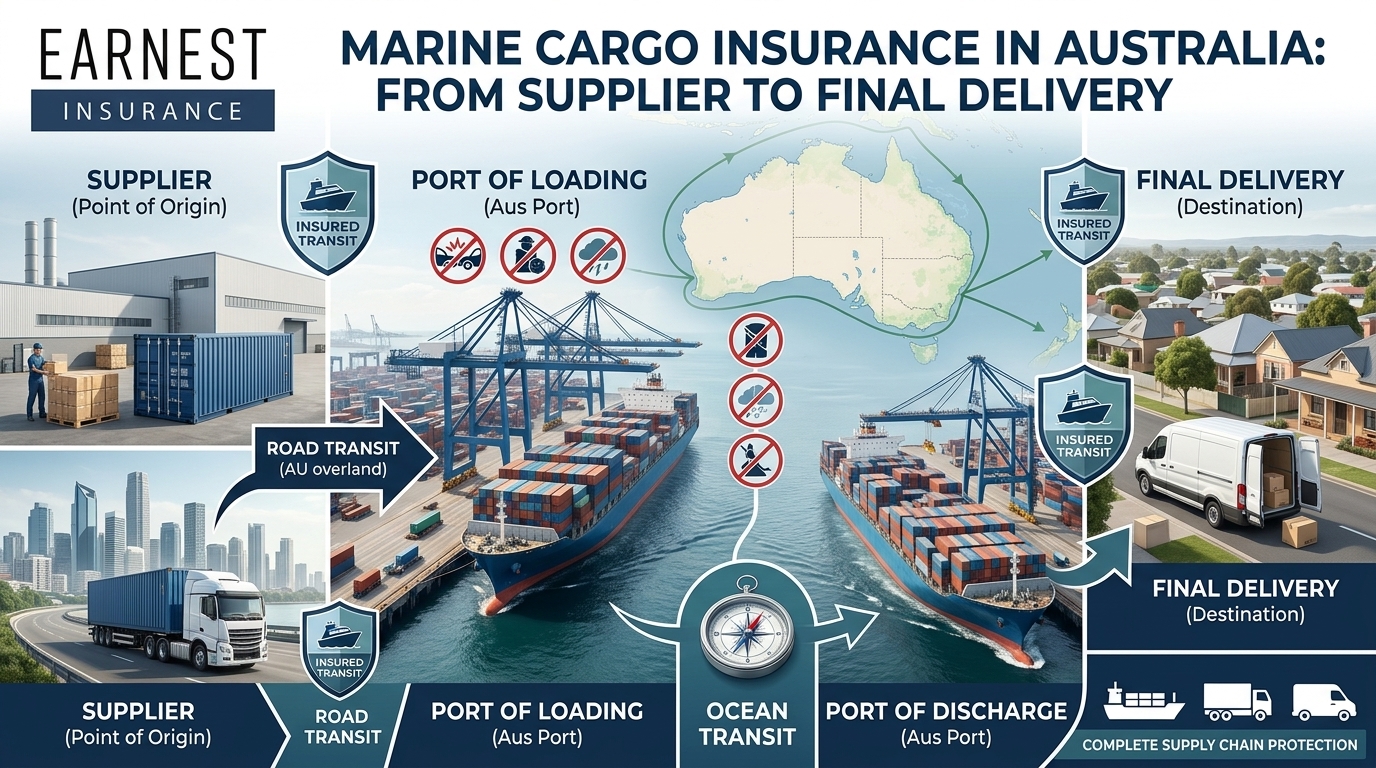
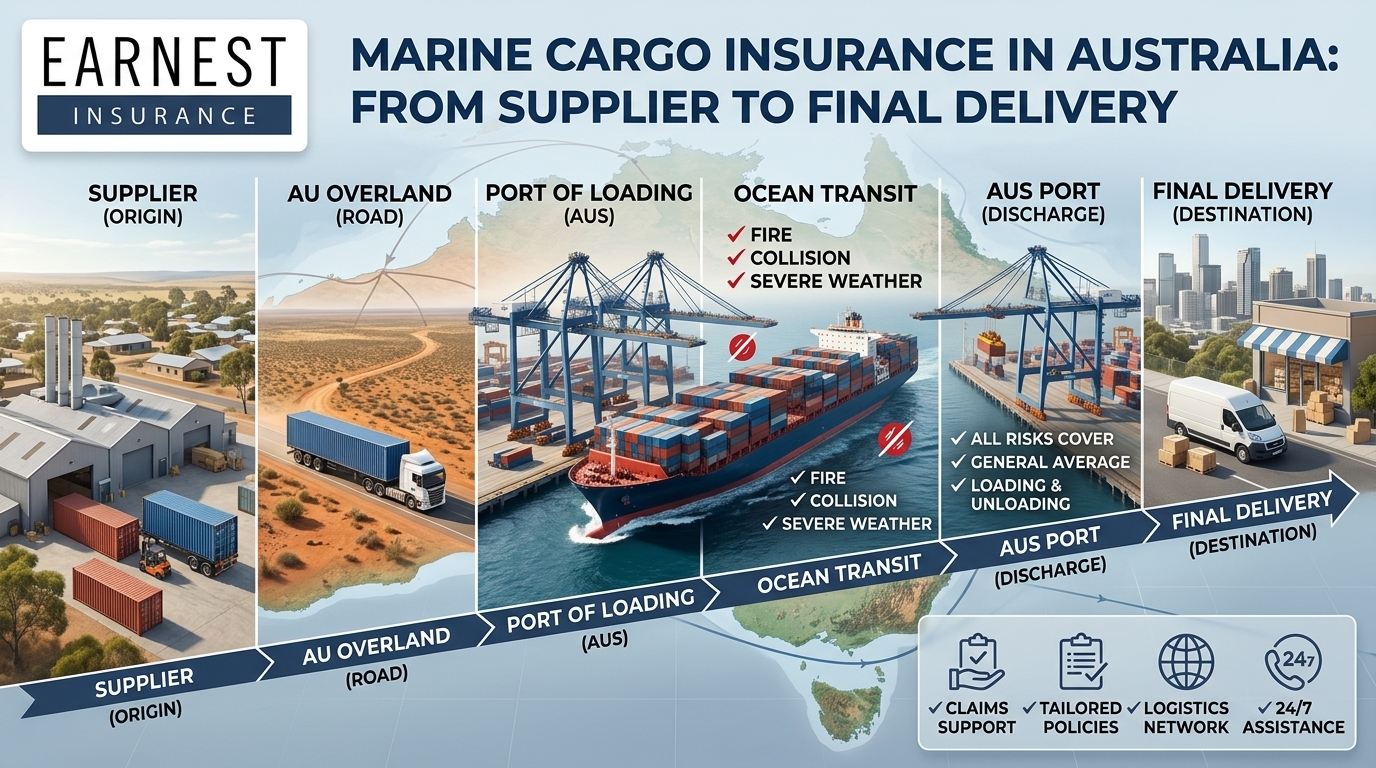
Marine Cargo Insurance in Australia: From Supplier to Final Delivery

Is Your Business Properly Insured? 10 Insurance Gaps Australian Businesses Should Check Before Renewal


How to Choose the Right Business, Construction, Truck, Bus and Marine Cargo Insurance in Australia


How to Choose the Right Business, Construction, Truck, Bus and Marine Cargo Insurance in Australia


How Much Is Public Liability Insurance in Melbourne? A 2026 Guide for Businesses


Business Insurance Broker Melbourne: How to Choose the Right Cover for Your Business


Business Insurance Broker Melbourne: How to Choose the Right Cover for Your Business

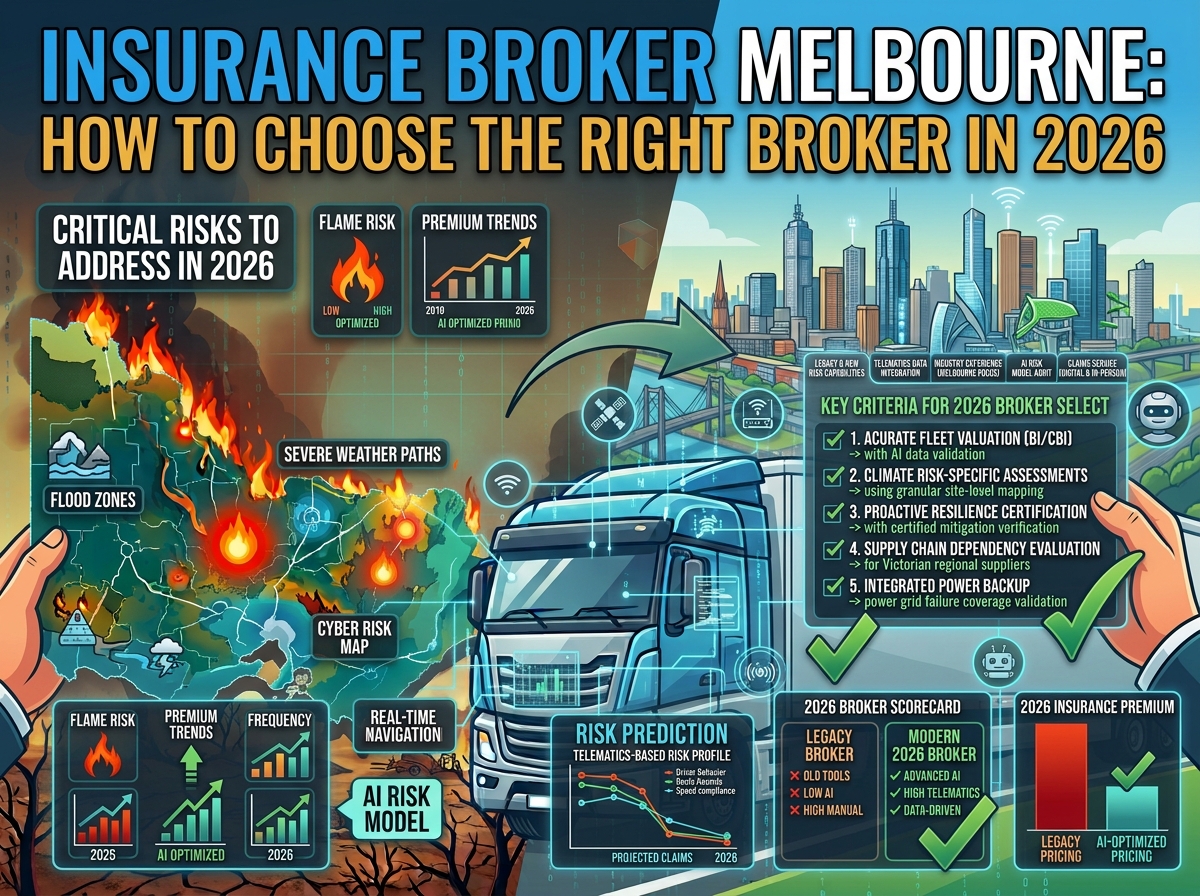
Insurance Broker Melbourne: How to Choose the Right Insurance Broker in 2026
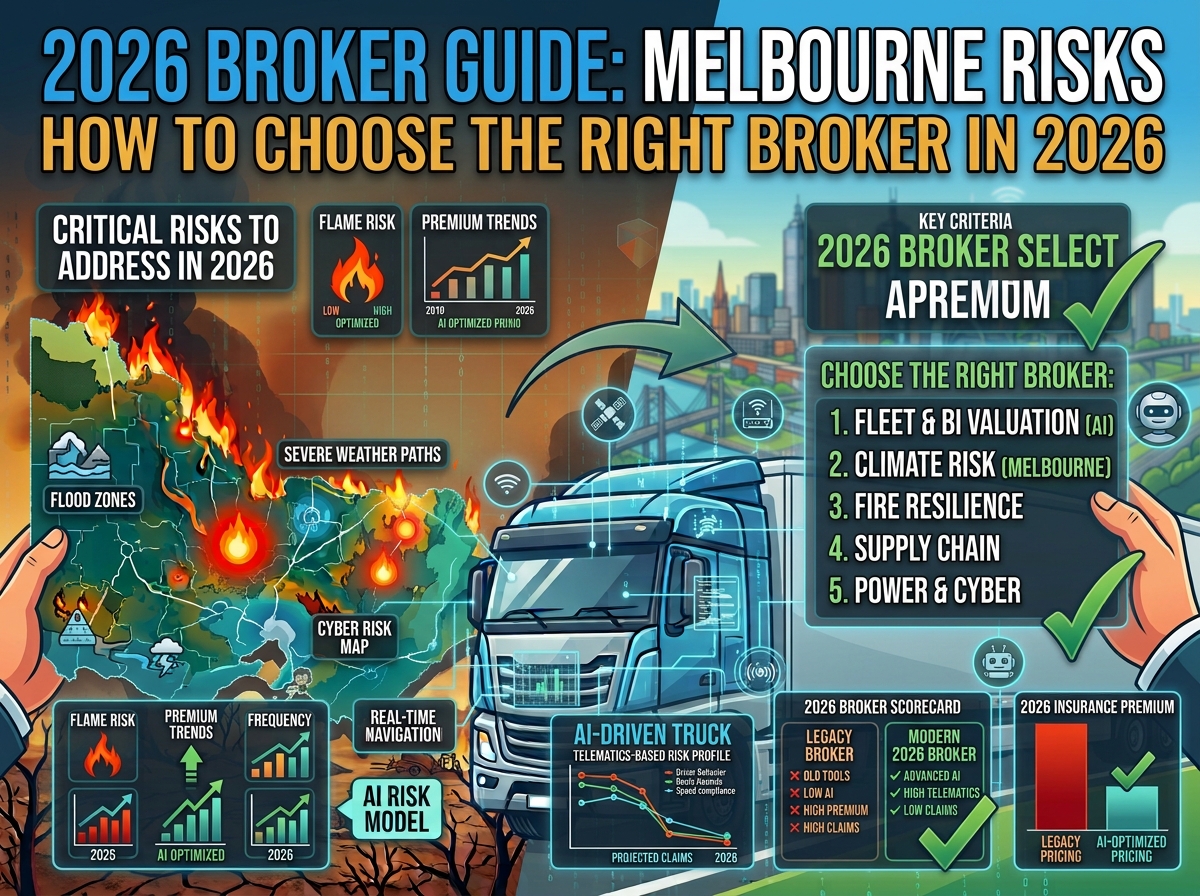

Truck Insurance Quote in 2026: How Telematics and AI Safety Technology Are Changing Truck Insurance in Melbourne


Truck Insurance Quote in 2026: What Melbourne Truck Operators Need to Know


Truck Insurance Quote: A Complete Guide to Truck Insurance in Melborune Australia
Bushfire & Climate Risk Insurance in Victoria: What Melbourne Businesses Should Review

Construction Insurance in Australia: What Every Builder, Tradie & Contractor Needs to Know


Cleaning Business Insurance Australia: Public Liability, Tools & Equipment Cover

A General Guide to Cargo & Marine Insurance

Types of Business Insurance: Liability & Directors Cover | Earnest Insurance

Sole Trader Public Liability Insurance | Costs & Cover

Everything You Need to Know About Small Truck Insurance

🏢 Commercial Property Insurance: What It Covers

Cafe & Coffee Shop Insurance

Insurance For Coffee Shops

Building & Construction Insurance Essentials


What you need to consider if you have a licensed venue

Insurance for the transport and logistics sector


What is really inside Business insurance?

Get in Touch
Have questions about insurance? Our expert brokers are here to help.