
Truck Insurance Quote in 2026: How Telematics and AI Safety Technology Are Changing Truck Insurance in Melbourne
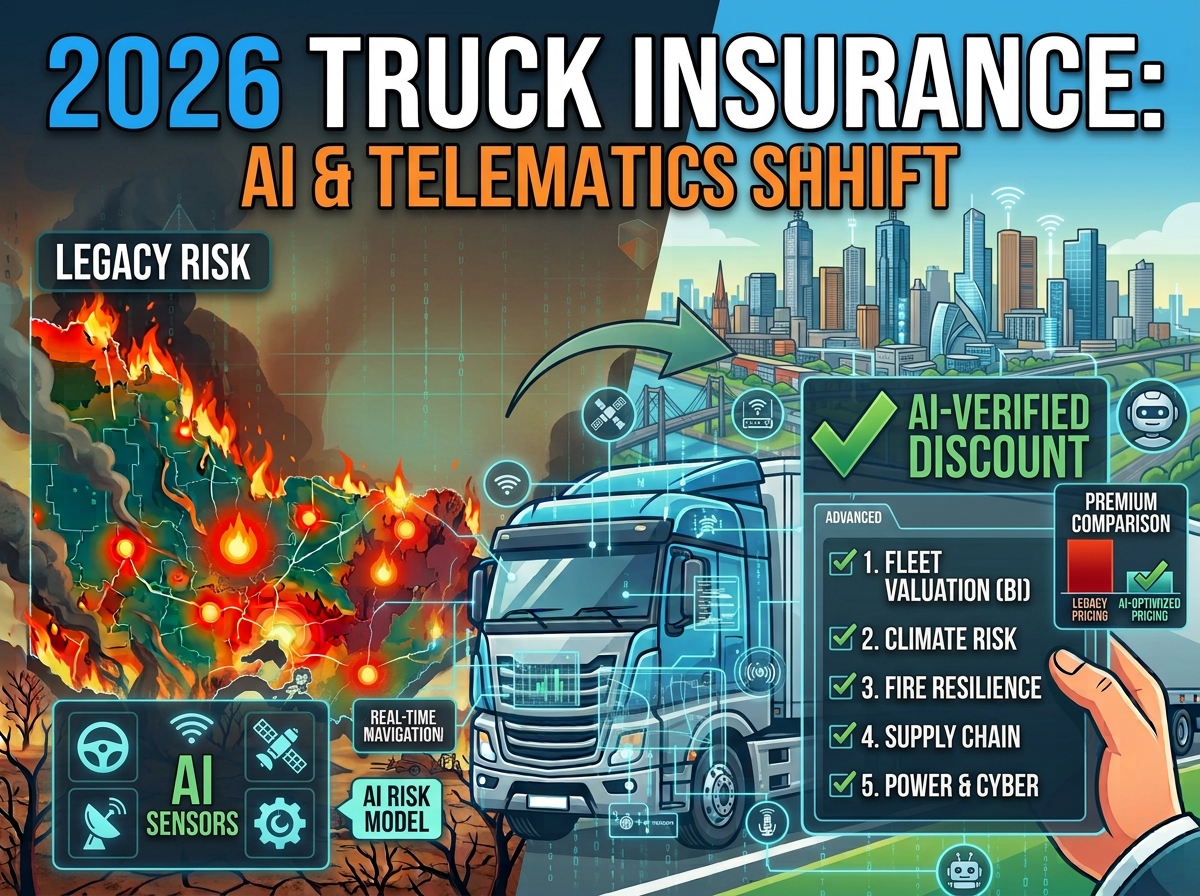
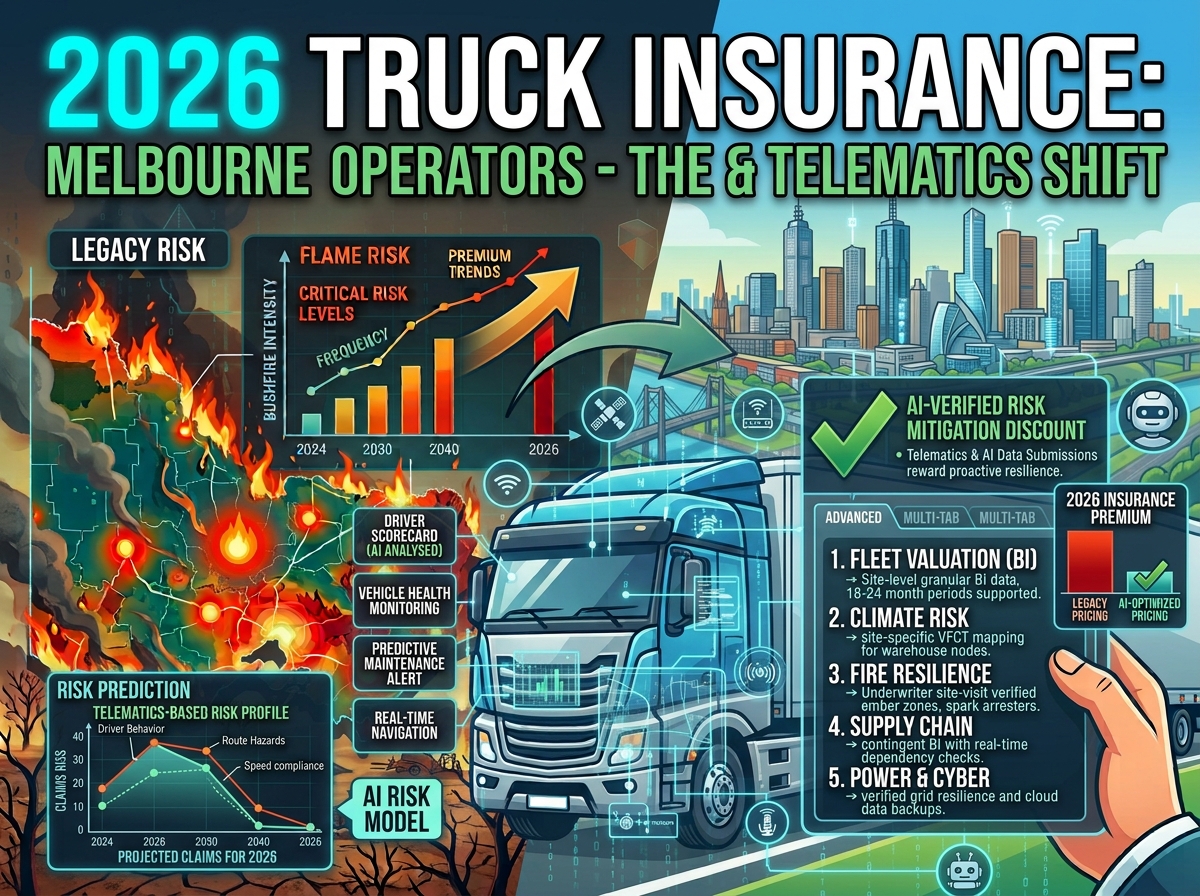
The way businesses obtain a truck insurance quote is changing.
For years, commercial truck insurance was mainly assessed around the vehicle, driver history, claims experience, operating area and type of freight being carried. Those factors still matter in 2026, but another source of information is becoming increasingly important: real-world vehicle and driver data.
GPS tracking, telematics, electronic work diaries, driver-behaviour monitoring, fatigue detection, dash cameras and vehicle diagnostics are becoming part of modern heavy-vehicle risk management. The National Heavy Vehicle Regulator (NHVR) has issued guidance specifically covering heavy-vehicle safety technology and telematics, including GPS tracking, driver-fatigue detection, vehicle monitoring and onboard mass monitoring.
For businesses searching for truck insurance Melbourne, this creates an important new question:
Can better safety data help a business present a stronger risk profile when seeking commercial truck insurance?
The answer depends on the insurer, policy and underwriting approach. There is no automatic discount simply because a truck has GPS or a dashcam. But the direction of the industry is clear: insurers and transport businesses have access to more operational data than ever before.
For Melbourne operators, fleet managers, owner-drivers and small transport businesses, understanding this trend can help make the next truck insurance quote more informed.
Why Truck Insurance Is Becoming More Data-Driven
A traditional insurance application largely depends on information supplied by the customer.
How many trucks do you operate?
What type of work do you do?
How far do you travel?
What do you carry?
How many drivers do you have?
How many claims have you made?
These questions are still central to commercial truck insurance.
But telematics adds another layer.
Instead of relying only on statements about how vehicles are driven, a transport operator can potentially have actual records showing:
- Vehicle location
- Driving hours
- Speed
- Harsh braking
- Acceleration
- Route patterns
- Engine performance
- Tyre information
- Driver fatigue events
- Vehicle loading information
- Maintenance information
The NHVR says telematics can provide insights into driving behaviour and vehicle dynamics and can support changes in driver behaviour and transport safety management.
That is why telematics is becoming an important conversation for businesses looking for truck insurance Australia.
It is no longer just a fleet-management tool.
It can become part of a broader risk-management story.
What Is Telematics in Truck Insurance?
Telematics is essentially the exchange of data between a vehicle, its driver and the operator.
For heavy vehicles, telematics can involve GPS tracking, electronic work diaries, driver-distraction systems, fatigue detection, vehicle monitoring and other connected technologies. The NHVR specifically identifies these categories in its heavy-vehicle safety technology guidance.
Transport Certification Australia also maintains an approval framework for telematics devices used in the national transport environment. Its information updated in July 2026 explains that type-approved devices are assessed for performance, reliability, accuracy, integrity and security.
In simple terms:
Telematics turns truck activity into data.
That data can then be used by transport businesses to understand how their vehicles and drivers are operating.
For a business requesting a truck insurance quote, better operational records can make the risk-management process more transparent.
However, operators should never assume that sharing telematics information automatically guarantees a cheaper premium.
Insurance pricing remains specific to the insurer and the individual risk.
The New Question Behind a Truck Insurance Quote
Traditionally, a truck insurance quote might focus heavily on the truck and the driver's history.
Increasingly, businesses should also be asking:
What information can we provide that demonstrates how responsibly our fleet is being operated?
A strong safety-management system could include:
- Driver training
- Fleet maintenance
- Telematics
- Dash cameras
- Fatigue monitoring
- GPS tracking
- Speed monitoring
- Incident reporting
- Preventative maintenance
- Load monitoring
- Regular risk reviews
The NHVR says safety technology is most effective when it is properly implemented and actually used, rather than installed merely as a “box-ticking” exercise.
This distinction is important.
Installing a camera does not automatically make a fleet safer.
Using the information from that camera to identify recurring risks, coach drivers and improve procedures is much more meaningful.
Truck Insurance Melbourne: Why This Matters for Local Operators
A Melbourne trucking business can face a wide range of operating conditions.
A vehicle may travel through:
- Melbourne CBD
- Industrial areas
- Warehousing precincts
- Construction zones
- Metropolitan suburbs
- Port-related routes
- Regional Victorian roads
- Interstate freight corridors
The same truck can therefore experience dramatically different traffic and operating environments during a normal week.
This makes fleet data useful.
For example, a fleet operator might discover from telematics that:
- Certain routes create repeated harsh-braking events
- Drivers spend too much time idling
- Some vehicles require more maintenance than others
- Particular shifts produce more fatigue alerts
- Certain loading patterns create weight-management concerns
- Specific intersections or routes generate recurring incidents
These insights can be used internally to improve the operation.
For a truck insurance Melbourne review, they can also provide a stronger understanding of the business's risk-management processes.
Again, this does not mean an insurer must reduce the premium.
It means the business has better evidence available when discussing its risk.
AI Dashcams and Commercial Truck Insurance
Another rapidly evolving area is the use of AI-assisted camera systems.
Modern fleet cameras can do more than record an accident.
Depending on the system, technology may identify or alert operators to events associated with:
- Driver distraction
- Fatigue
- Mobile-phone use
- Harsh braking
- Lane departure
- Following distance
- Unsafe driving patterns
- Collision risks
The NHVR identifies fatigue, drowsiness and distraction detection technologies as an emerging safety-management tool and states that these systems can alert drivers and operators to potential fatigue or distraction events.
For an insurance discussion, this creates an interesting shift.
A dashcam can do more than help explain a claim after an accident.
It can potentially contribute to prevention before an accident.
That changes the role of vehicle technology from passive evidence to active risk management.
Can Telematics Lower a Truck Insurance Quote?
This is one of the most searched questions in the modern commercial vehicle market.
The honest answer is:
Sometimes, but it depends on the insurer and policy.
There is no universal Australian rule stating that a fleet with telematics automatically receives a lower truck insurance quote.
Different insurers use different underwriting models.
However, the broader insurance industry is increasingly experimenting with data-driven pricing.
For example, overseas commercial insurers have introduced programmes where driving data can be used to assess risk or provide premium incentives. These examples demonstrate an industry trend, but they should not be treated as evidence that the same discounts are automatically available from Australian insurers.
For an Australian operator, the practical lesson is different:
Ask the broker or insurer whether verified telematics or fleet-safety information is considered during underwriting.
That is a much better approach than assuming a discount exists.
Truck Insurance Australia: Is Data Sharing Becoming More Important?
Data privacy is an increasingly important part of connected vehicle technology.
A transport operator may ask:
“What happens to my driving data?”
“That is a reasonable question.”
Telematics can potentially capture sensitive operational information such as:
- Vehicle location
- Driver activity
- Driving times
- Routes
- Incident events
- Vehicle performance
- Work patterns
Before giving access to data, businesses should understand:
- What information is collected
- Why it is collected
- Who can access it
- How long it is retained
- How it is used
- Whether it is shared with third parties
- Whether it forms part of underwriting
- What happens if the data shows poor driving behaviour
This is especially relevant where a business uses third-party fleet-management platforms.
A cheaper insurance premium is not the only consideration.
The business should understand the broader data implications.
Small Truck Insurance and Technology
Technology is not limited to large transport fleets.
Small businesses can also use connected safety systems.
A Melbourne business operating one or two trucks may use a vehicle for:
- Local deliveries
- Construction
- Landscaping
- Trades
- Equipment transport
- Furniture delivery
- Service work
- Wholesale distribution
This means small truck insurance can increasingly involve technology even when the business is not a large fleet.
A simple GPS tracker can help monitor vehicle location.
A dash camera can provide an objective record of a collision.
Maintenance software can help identify recurring mechanical issues.
Driver alerts can encourage safer driving.
The business does not need a 100-truck fleet to benefit from better operational information.
Light Truck Insurance in 2026
The same trend applies to light truck insurance.
Light commercial vehicles often operate in dense urban environments where traffic behaviour, parking, short trips and frequent stops can increase operational risk.
A business seeking a light truck insurance quote may benefit from understanding:
- How many kilometres are driven
- How frequently the vehicle operates
- Who drives it
- Where it is parked
- What equipment it carries
- Whether it travels interstate
- Whether it is used by multiple employees
A telematics system can provide additional information about these activities.
But once again, technology should support proper risk management rather than simply being installed for appearance.
Commercial Truck Insurance and Driver Behaviour
Driver behaviour remains one of the most important areas for transport risk management.
The NHVR's road-monitoring system uses automated algorithms to identify risk related to fatigue, mechanical compliance and repeat offending. It also uses digital alerts and mobile ANPR technology as part of its compliance operations.
This illustrates a broader industry trend:
Commercial trucking is becoming increasingly measurable.
Operators can no longer think about safety purely in terms of inspections after an event.
Data can help identify risk patterns before something goes wrong.
For example:
A driver repeatedly brakes harshly at the same type of intersection.
A truck regularly exceeds a defined speed threshold.
A vehicle shows recurring tyre-pressure issues.
A particular route creates unusually long driving periods.
A driver receives repeated fatigue alerts.
These patterns provide opportunities for intervention.
That can help the business manage risk more proactively.
Commercial Trucking Insurance for Fleets
For larger operators, data becomes even more powerful.
A fleet might include:
- Prime movers
- Rigid trucks
- Light trucks
- Trailers
- Refrigerated vehicles
- Service vehicles
- Tow trucks
- Buses
- Specialised equipment
Fleet insurance providers already structure products around multiple vehicle types and transport operations. For example, NTI's current fleet product describes cover for Australian heavy motor fleets including prime movers, trailers, rigid trucks, mobile plant and equipment and buses, with options to include lighter vehicles on the same programme.
For these operators, the question is no longer simply:
“What's the price of the truck?”
It becomes:
“How is the entire fleet performing?”
That can include:
- Claims frequency
- Driver safety
- Maintenance
- Vehicle utilisation
- Operating territories
- Vehicle types
- Incident patterns
- Safety technology
This is where commercial trucking insurance and fleet risk management start to overlap.
Tow Truck Insurance Australia: Why Telematics Can Be Useful
Tow truck insurance Australia presents another interesting use case.
Tow truck operators can spend significant time in high-risk roadside environments.
They may attend:
- Accident scenes
- Breakdown locations
- Busy roads
- Emergency roadside situations
- Workshops
- Auctions
- Vehicle storage facilities
A connected vehicle system can potentially provide useful records around:
- Dispatch times
- Vehicle location
- Driving behaviour
- Incident timing
- Route history
- Vehicle use
For claims management, objective information can be valuable.
For example, if an accident occurs, GPS or camera data may help establish what happened.
However, every insurer has different requirements and underwriting practices. A business should ask what technology is relevant to its specific policy rather than assuming a particular device will change the insurance outcome.
What Does a Modern Truck Insurance Quote Look Like?
A modern quote conversation is becoming broader.
Instead of discussing only:
Truck + Driver + Claims
a broker may need to understand:
Truck + Driver + Business + Freight + Route + Safety + Technology + Claims
That is a much more complete risk picture.
A Melbourne business requesting a quote should be prepared to discuss:
Vehicle
Make, model, year, value and specifications.
Use
Delivery, construction, towing, freight, service work or another activity.
Freight
What the truck carries and whether the cargo presents specific risks.
Territory
Melbourne, Victoria-wide or interstate.
Drivers
Experience, numbers and claims history.
Technology
Telematics, cameras, fatigue detection, tracking and related tools.
Risk management
Training, maintenance, safety procedures and incident reviews.
Claims history
Previous losses and their circumstances.
Providing this information can help the insurer or broker understand the operation more accurately.
Does Having a Dashcam Guarantee a Cheaper Premium?
No.
This is an important distinction.
A dashcam may improve evidence collection, assist internal safety management and help establish what happened in an incident.
But that does not mean an insurer must automatically provide a discount.
The same applies to:
- GPS
- Telematics
- Fatigue detection
- Driver monitoring
- Electronic work diaries
- Fleet-management platforms
The business should regard technology as a risk-management asset first, and only treat any insurance discount as a possible additional benefit if the insurer confirms it.
How to Prepare for a Better Truck Insurance Quote
If your policy is due for renewal, use the opportunity to document improvements.
Prepare a simple fleet-risk summary containing:
1. Vehicle list
Record every truck, trailer and relevant vehicle.
2. Driver information
Maintain current driver records.
3. Claims history
Identify what happened and what was changed after previous incidents.
4. Safety technology
List telematics, cameras, monitoring systems and related equipment.
5. Maintenance
Document servicing and preventative maintenance.
6. Training
Record driver training and safety initiatives.
7. Operating area
Document Melbourne, Victoria and interstate exposure.
8. Freight
Clearly explain what the vehicles transport.
This gives the broker or insurer a more complete view of the business.
2026 Trend: From “What Happened?” to “Why Did It Happen?”
One of the most important changes in commercial vehicle risk management is the move from reactive analysis to predictive thinking.
Traditional insurance asks:
What happened?
Modern fleet technology increasingly asks:
What patterns were visible before it happened?
That distinction matters.
Suppose a fleet experiences three minor incidents.
A traditional review might simply record three claims.
A data-driven review might discover:
- Similar route conditions
- Similar time periods
- Similar driver behaviour
- Similar vehicle characteristics
- Similar weather conditions
The operator can then make a targeted change.
That is the real value of telematics.
It is not simply about producing data.
It is about converting data into safer decisions.
Frequently Asked Questions
What is the biggest new trend in truck insurance in 2026?
One important trend is the increasing role of telematics and connected safety technology in commercial vehicle risk management. NHVR guidance specifically addresses telematics, GPS tracking, fatigue detection, vehicle monitoring and other safety technologies.
Can telematics reduce my truck insurance quote?
It may influence underwriting in some situations, but there is no universal Australian discount. Ask the insurer or broker whether telematics data is considered for the specific policy.
What is telematics for trucks?
Telematics is technology that collects and communicates information about vehicles and their operation. It can include GPS, work/rest records, driver monitoring, fatigue technology and vehicle-performance information.
Is telematics only useful for large fleets?
No. Small businesses operating one or a few commercial vehicles can also use GPS, dashcams and vehicle monitoring to improve safety and operational visibility.
Can AI dashcams help with commercial truck insurance?
AI-assisted cameras can support driver safety and incident investigation. Whether an insurer uses such data in underwriting or pricing depends on the insurer and policy.
Does telematics affect small truck insurance?
Potentially. Smaller commercial operators can use connected technology to monitor vehicle usage and driver behaviour, but any insurance impact depends on the underwriting approach.
Can technology help tow truck insurance?
Telematics and cameras can provide useful operational records for towing businesses, particularly where vehicles operate in busy roadside environments. The insurance effect depends on the insurer.
Is truck insurance Melbourne different from truck insurance Australia?
The fundamental insurance principles are similar, but a Melbourne operator may have different operating patterns, traffic exposure and territory requirements from an interstate operator.
What information do I need for a truck insurance quote?
Typically, information about the truck, value, business activity, drivers, claims history, operating area, freight and usage is important. Technology and risk-management information may also be useful.
What is commercial trucking insurance?
Commercial trucking insurance is insurance for businesses operating commercial trucks and transport-related vehicles. Fleet arrangements can cover multiple vehicle types, depending on the policy and insurer.
The Future of Truck Insurance in Melbourne
The commercial transport industry is moving toward a future where vehicles generate more operational information.
The NHVR says the uptake of safety technologies and telematics is steadily increasing, while Transport Certification Australia continues to develop assurance frameworks for approved telematics devices.
For Melbourne businesses, that means the next generation of commercial truck insurance may be increasingly connected to real-world risk information.
The future conversation may involve questions such as:
- How safely does the fleet operate?
- What does the data show?
- How often do safety events occur?
- How quickly are incidents addressed?
- What preventative systems are in place?
- How effectively does management use technology?
- What has changed since the previous policy period?
Insurance will still depend on the individual insurer, policy and risk.
But the quality of the information available to transport businesses is changing rapidly.
Get a Truck Insurance Quote in Melbourne, Victoria
If you are searching for a truck insurance quote, now is a good time to look beyond the headline premium.
Whether your business needs truck insurance Melbourne, truck insurance Australia, commercial truck insurance, small truck insurance, light truck insurance, tow truck insurance Australia or commercial trucking insurance, start by understanding the entire operation.
Your truck is only one part of the risk.
Your drivers, routes, freight, maintenance, technology, safety procedures and claims history all help tell the story of the business.
A modern commercial insurance review should take that bigger picture into account.
Earnest Insurance helps businesses explore commercial insurance solutions based on their individual vehicles, operations and risk requirements.
Request a truck insurance quote today and discuss your vehicle, business use, fleet, operating area and risk-management approach with an insurance professional.
Final Takeaway
The biggest new insurance conversation in commercial trucking is increasingly about data.
Telematics, connected vehicles, fatigue detection, GPS tracking and driver-safety technology are giving transport operators far more information about how trucks are actually being used.
The NHVR says these technologies can support safer transport operations, while Transport Certification Australia continues to strengthen assurance around telematics devices.
For a Melbourne operator, that means preparing for a truck insurance quote should involve more than collecting registration details and last year's premium.
It should also involve understanding the business's safety record, vehicle technology, driver-management processes and operational data.
Better data does not guarantee cheaper insurance. But better risk information can lead to a better-informed insurance conversation.
Subscribe to our newsletter
Related posts
More Blog Posts
Truck Insurance Quote in 2026: How Telematics and AI Safety Technology Are Changing Truck Insurance in Melbourne

Truck Insurance Quote in 2026: What Melbourne Truck Operators Need to Know


Truck Insurance Quote: A Complete Guide to Truck Insurance in Melborune Australia
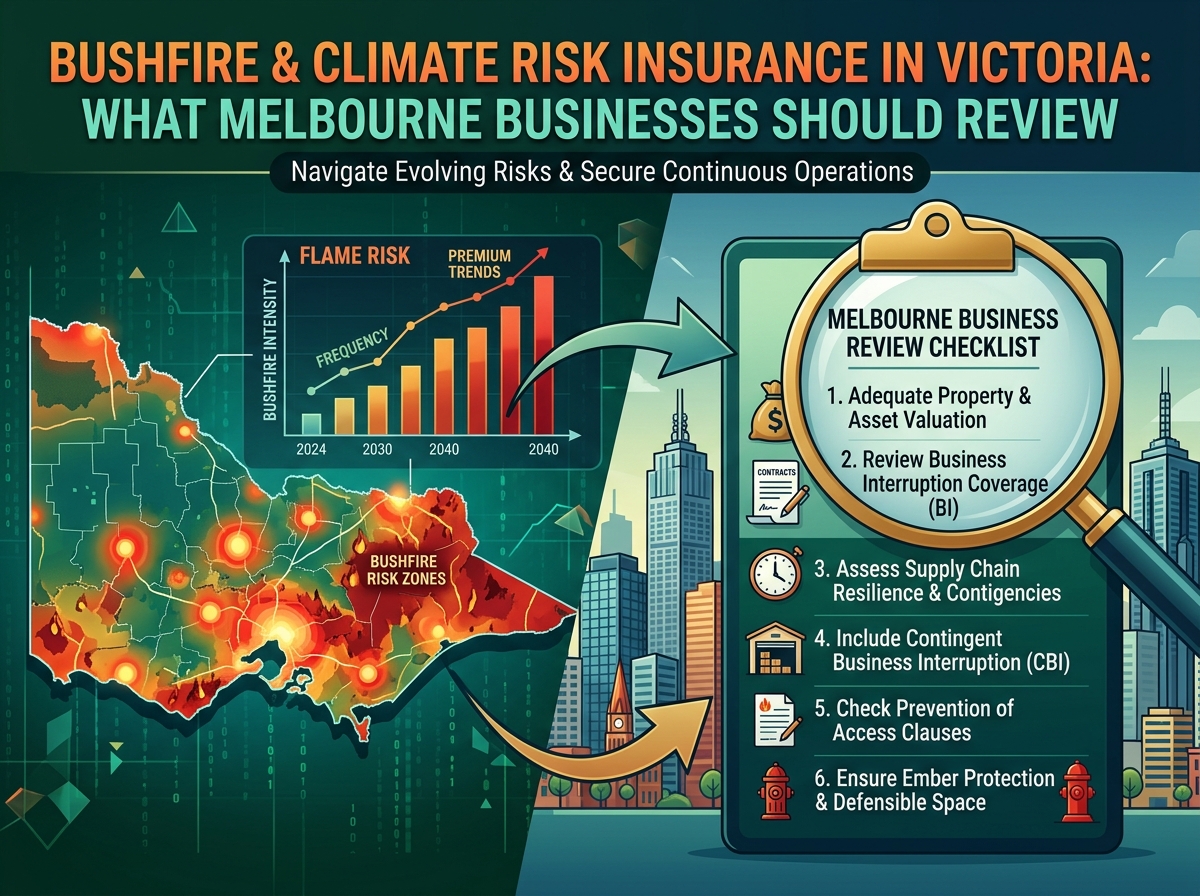
Bushfire & Climate Risk Insurance in Victoria: What Melbourne Businesses Should Review
.png)
Construction Insurance in Australia: What Every Builder, Tradie & Contractor Needs to Know


Cleaning Business Insurance Australia: Public Liability, Tools & Equipment Cover

A General Guide to Cargo & Marine Insurance

Types of Business Insurance: Liability & Directors Cover | Earnest Insurance

Sole Trader Public Liability Insurance | Costs & Cover
Everything You Need to Know About Small Truck Insurance

🏢 Commercial Property Insurance: What It Covers

Cafe & Coffee Shop Insurance

Insurance For Coffee Shops
.jpg)
Building & Construction Insurance Essentials
.jpg)

What you need to consider if you have a licensed venue

Insurance for the transport and logistics sector


What is really inside Business insurance?

Get in Touch
Have questions about insurance? Our expert brokers are here to help.