
Marine Cargo Insurance for Heavy Machinery and Project Cargo in Australia
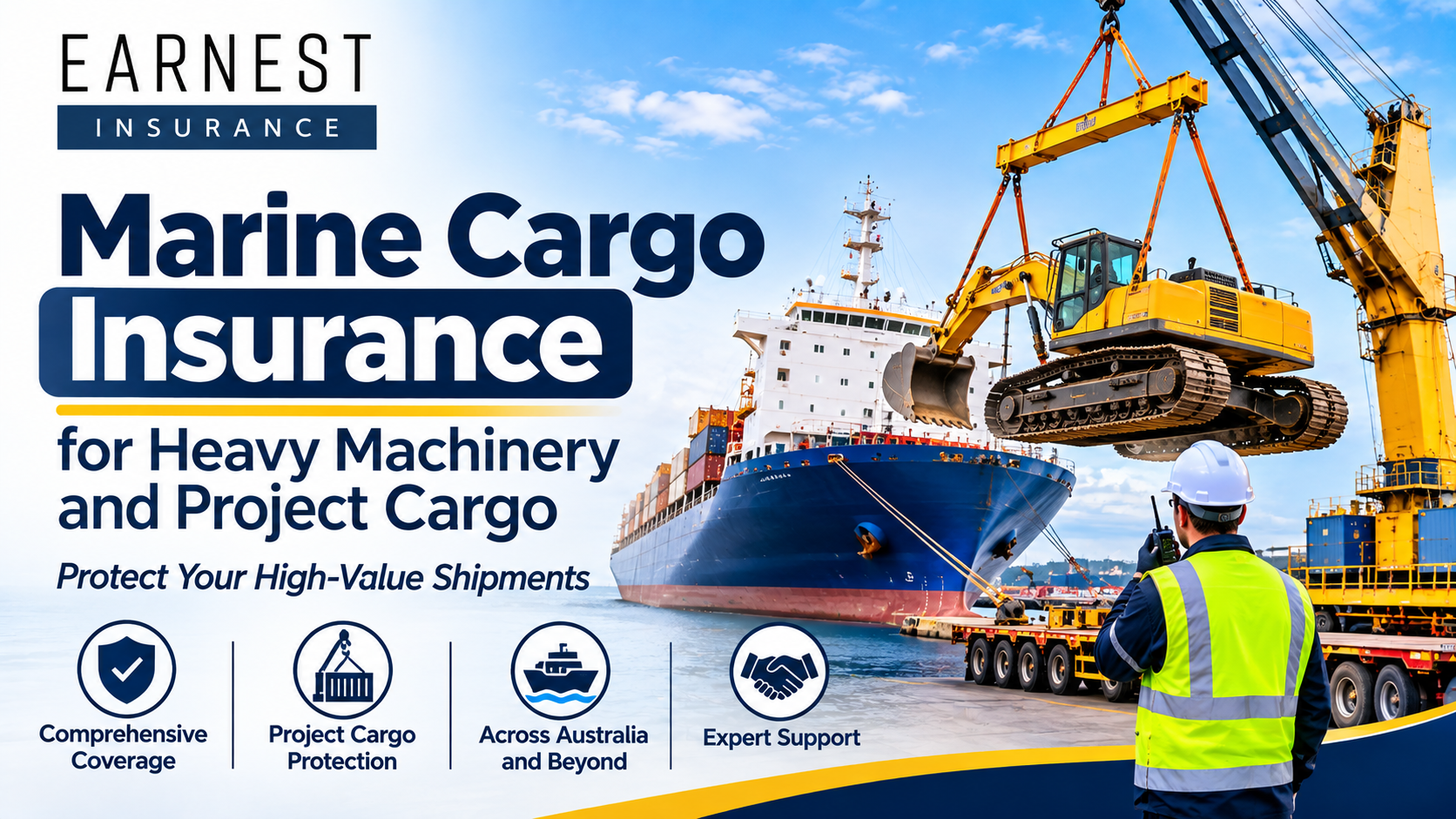
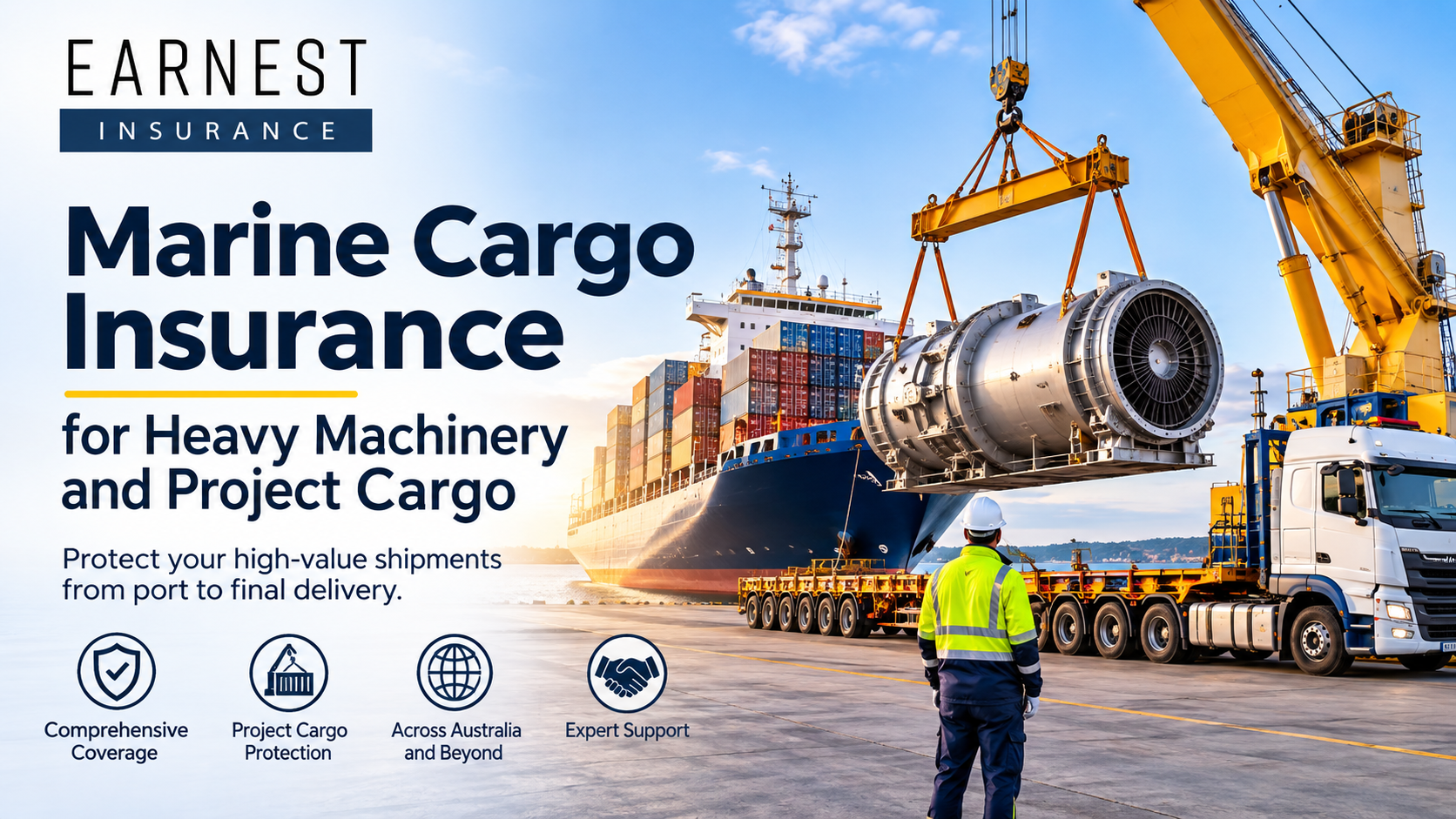
Introduction: Protecting High-Value Equipment During Transportation
Transporting a large industrial machine or specialised piece of equipment is very different from shipping ordinary commercial goods. A single shipment might involve lifting equipment weighing several tonnes, specialised trailers, port handling, international vessels and a carefully planned delivery route to a construction or industrial site.
A damaged component, an incorrectly secured machine or an accident during unloading can create significant financial consequences for the businesses involved.
Marine cargo insurance helps businesses manage the financial risks of physical loss or damage to insured goods during covered transportation, including shipments involving heavy machinery and project cargo. The actual protection depends on the policy wording, insured events, exclusions, agreed values and any specialist extensions.
For Australian businesses importing machinery, supplying infrastructure projects or moving industrial equipment between locations, selecting suitable cargo insurance requires careful consideration of the complete transportation process.
Consider an Australian construction company importing a large industrial transformer from Europe. The equipment must travel from the manufacturer to a shipping terminal, cross the ocean, pass through an Australian port and then be transported by an oversized road vehicle to a regional project site.
Every stage introduces different risks.
Marine cargo insurance can help address specified cargo-related exposures, but businesses must establish whether loading, unloading, heavy lifting, temporary storage and connecting land transport are included.
This guide explains how project cargo insurance works, what Australian businesses should consider before moving high-value machinery and how to identify potential coverage gaps before a shipment begins.
1. What Is Project Cargo Insurance?
Project cargo insurance is a specialised area of marine cargo insurance concerned with transporting large, high-value, complex or unusual equipment associated with major commercial and infrastructure projects.
Unlike ordinary packaged freight, project cargo frequently requires special transportation arrangements and individual risk assessments.
The shipment may involve oversized dimensions, unusual weight distribution, specialist lifting equipment or several different transportation methods.
Typical project cargo includes:
- Industrial machinery and manufacturing equipment.
- Power generation turbines and generators.
- Large electrical transformers.
- Mining and mineral processing equipment.
- Construction machinery and specialised plant.
- Wind turbine components.
- Solar energy infrastructure equipment.
- Bridge and infrastructure components.
- Steel structures and industrial fabrication.
- Water treatment and desalination equipment.
These shipments are common in construction, mining, renewable energy, manufacturing and infrastructure development.
Project cargo may be transported using container vessels, break-bulk vessels, heavy-lift ships, barges, low-loader trailers or combinations of different transport methods.
Each movement requires an assessment of the cargo itself and how it will be handled.
A standard marine cargo policy may provide relevant protection, but businesses should not assume that its terms automatically accommodate every oversized or specialist shipment.
Insurers may require additional information, project-specific underwriting or specialist survey arrangements.
For an overview of the Australian project cargo market, see AIG Australia's Ocean Marine Insurance information.
2. Why Heavy Machinery Needs Different Cargo Insurance Considerations
The financial exposure associated with transporting heavy machinery is not limited to the purchase price.
Some equipment is manufactured for a particular project and cannot easily be replaced from another supplier. Other machinery may have long manufacturing lead times or require specialist components that are difficult to source.
Damage to one part can affect the usability of an entire machine.
There are several reasons why heavy machinery deserves particular attention when arranging marine cargo insurance.
High replacement and repair costs
Industrial machinery can contain specialised electrical, hydraulic, mechanical and electronic components.
Even when damage appears relatively minor, repairs may require specialist engineers, replacement components and international technical support.
A damaged transformer, for example, might require more than repairing an external casing. Internal components could need testing, replacement or specialist assessment before the equipment can be installed.
The insurance value should reflect the agreed valuation basis and relevant costs rather than relying on an arbitrary estimate.
Unusual weight and dimensions
Large machinery can have an unusual centre of gravity or weight distribution.
This creates additional requirements for lifting, securing and transportation.
The lifting equipment, trailer configuration and vessel arrangements must all be suitable for the particular cargo.
Limited replacement availability
Project-specific components may take months to manufacture and deliver.
A damaged piece of machinery may therefore affect not only the direct replacement cost but also the construction or commissioning schedule.
Complex transportation arrangements
A shipment might involve several carriers, ports, logistics contractors and handling companies.
When more parties are involved, documenting responsibilities and confirming insurance arrangements becomes especially important.
3. What Risks Can Affect Heavy Machinery During Marine Transportation?
Moving heavy equipment involves several distinct risk points.
Understanding them allows a business to discuss suitable insurance arrangements and risk-management procedures before the shipment begins.
Damage during loading and unloading
Lifting heavy equipment onto a vessel or transport vehicle requires suitable cranes, lifting accessories, rigging and carefully prepared procedures.
An incorrect lifting point, unsuitable crane arrangement or sudden movement can cause substantial damage.
Possible consequences include:
- Structural deformation.
- Damage to electrical components.
- Broken lifting attachments.
- Impact damage.
- Equipment instability.
- Damage to surrounding machinery or infrastructure.
Businesses should establish whether loading and unloading are included within their cargo insurance arrangements.
Do not assume that cover automatically begins when machinery leaves the manufacturer's building or continues through every movement at the destination.
Inadequate packaging and securing
Industrial machinery may require custom protective packaging, moisture protection, structural supports and specialist securing arrangements.
Large equipment also needs appropriate lashing and sea fastening to prevent unwanted movement during transportation.
Poor securing can expose cargo to vibration, shifting, impact and other damage.
Packaging and securing requirements should be established based on the intended route and transportation conditions.
Vessel movement and severe weather
Marine transportation introduces environmental risks, including rough seas and severe weather.
If machinery is incorrectly secured, movement during a voyage can place stress on the equipment and supporting structures.
The selection of an appropriate vessel and suitable stowage arrangements is particularly important for unusual or oversized cargo.
Port handling and transhipment
Some project cargo requires unloading at one port before being transferred to another vessel or transportation method.
Each transfer introduces additional handling exposure.
Businesses should confirm that the insurance arrangement addresses the actual transportation route, including agreed transhipment points and relevant temporary storage.
Road transportation accidents
In Australia, large machinery often travels considerable distances between ports and regional project locations.
An accident involving a low-loader, heavy vehicle or escort arrangement can damage the cargo even when the ocean voyage has been completed successfully.
Marine cargo insurance may include connecting land transport, depending on the policy.
It should not be assumed that every domestic road movement is automatically included.
4. Understanding Multimodal Transportation and the Complete Journey
A major challenge in project cargo transportation is coordinating multiple transport methods.
A single industrial machine might travel through the following stages:
- Collection from the manufacturer's facility.
- Initial road transportation to an export port.
- Loading onto a vessel.
- International sea transportation.
- Discharge at an Australian port.
- Customs clearance and terminal handling.
- Transfer to a specialised heavy vehicle.
- Road transportation to the project location.
- Final unloading and positioning at the site.
The important insurance question is whether the policy covers the relevant goods throughout the agreed journey.
Where does marine cargo insurance begin?
The commencement of cover depends on the applicable policy wording and the agreed transit.
Some cargo clauses provide for cover to attach when goods are first moved for the purpose of immediate loading for the insured journey.
Other arrangements may have different starting points or conditions.
A business should confirm exactly when its insurance begins rather than assuming that the policy covers goods from the moment they leave the manufacturer's premises.
When does coverage end?
The termination point is equally important.
Some transit arrangements end when goods are unloaded at their final insured destination.
However, equipment may still need to be moved to another part of a site, placed on foundations, assembled or commissioned.
These activities should not automatically be assumed to fall within ordinary marine cargo cover.
Where necessary, the business should arrange suitable additional insurance for storage, installation or subsequent project activities.
Why this matters for Australian businesses
A company importing machinery into Melbourne might have insurance for the international voyage but need to confirm the protection available during the subsequent road journey to a regional construction site.
Similarly, a mining operator transporting equipment to a remote Australian location should consider the full route, handling arrangements and any periods of storage.
The insurance programme should reflect the actual logistics plan.
5. Route Surveys and Oversized Cargo Transportation in Australia
One of the most overlooked aspects of project cargo insurance is the inland transportation route.
A piece of machinery may be perfectly suitable for sea transportation but difficult to move between an Australian port and its final destination.
Large equipment can exceed normal vehicle mass or dimension limits and may require specialist road transport arrangements.
This is particularly relevant to equipment imported for mining, energy, construction and infrastructure projects.
What does a route survey involve?
A route assessment examines whether the proposed transportation route is suitable for the vehicle, trailer and cargo.
Depending on the shipment, considerations may include:
- Bridge heights and structural limitations.
- Road widths and turning areas.
- Overhead power lines and utilities.
- Gradients and road surface conditions.
- Railway crossings.
- Access to industrial facilities.
- Loading and unloading locations.
- Temporary obstructions.
- Suitable stopping and staging areas.
An unsuitable route may cause delays, require an alternative transportation arrangement or create additional handling risks.
Australian oversize and overmass requirements
The National Heavy Vehicle Regulator (NHVR) provides information about oversize and overmass (OSOM) movements in Australia.
Depending on the vehicle, cargo dimensions, route and applicable notices, an access permit may be required.
The NHVR also explains that third-party approvals may be necessary where a proposed movement affects certain infrastructure or assets.
Businesses organising large equipment movements should review the relevant requirements before transportation begins.
Useful official resources include:
Importantly, having marine cargo insurance does not replace road permits, transportation approvals or legal compliance requirements.
These are separate responsibilities that need to be managed alongside the insurance arrangements.
6. What Does Cargo Insurance Coverage Include for Project Shipments?
The extent of cargo insurance coverage depends on the selected policy and the risks agreed with the insurer.
For heavy machinery and project cargo, businesses should examine several areas.
Accidental physical loss or damage
Some cargo policies provide broad protection against accidental physical loss or damage during covered transit, subject to exclusions.
This can be relevant when machinery is damaged through an insured transportation incident.
The applicable insured events and exclusions must be confirmed in the policy wording.
Loading and unloading
Confirm whether the policy addresses damage during:
- Crane operations.
- Forklift handling.
- Loading onto trailers.
- Loading onto vessels.
- Unloading at ports.
- Final discharge at the destination.
These activities should be reviewed carefully because the policy's transit definition may influence whether a particular incident is covered.
Theft and non-delivery
Depending on the policy, protection may be available for specified theft losses and non-delivery of insured cargo.
High-value machinery should also have suitable security arrangements, shipping documentation and delivery controls.
Transhipment and temporary storage
Some project movements involve temporary storage between transportation stages.
Check whether ordinary transit-related storage and transhipment are included and whether there are specific limits or time restrictions.
Long-term warehousing may need separate property or stock insurance.
General average and salvage
A serious maritime incident can lead to general average or salvage-related expenses.
These costs are different from ordinary physical damage to machinery.
Review the relevant cargo clauses to understand which expenses are insured and under what circumstances.
7. Should You Consider Project-Specific Marine Cargo Insurance?
Not every heavy machinery shipment should automatically be insured in the same way as routine commercial stock.
For businesses undertaking large infrastructure or industrial projects, project-specific insurance arrangements may be more appropriate than relying on a general annual cargo policy.
A project-specific assessment may consider:
- Total project cargo values.
- Individual machinery values.
- Number of shipments.
- Transportation routes.
- Different suppliers and manufacturers.
- Vessel and trailer arrangements.
- Project timelines.
- Storage and handling locations.
- Special survey requirements.
For instance, a renewable energy project may involve transporting several turbine components from overseas suppliers.
Each component could have different dimensions, transportation requirements and handling procedures.
A project-specific arrangement allows these details to be presented for underwriting rather than assuming that every item fits a standard cargo declaration.
Insurers offering specialist marine solutions identify project cargo, heavy lifts and unusual transportation risks as areas requiring individual consideration.
You can review examples of these specialist approaches through Chubb Australia's Marine Cargo Insurance and Allied World's Australian Marine Insurance offering.
Availability, eligibility, limits and conditions vary by insurer.
8. Marine Cargo Surveys: Why Inspection Before Shipping Matters
A marine cargo survey is an important risk-management tool for certain high-value or complex shipments.
A surveyor may inspect the equipment, packaging, lifting arrangements, stowage and securing procedures.
Some insurers may require an independent marine warranty survey or specified approvals before a critical shipment proceeds.
What can a cargo survey examine?
Depending on the survey's agreed scope, inspections may cover:
Pre-shipment condition: Establishing the condition of machinery before transportation.
Packaging inspection: Checking whether the packaging and protection are appropriate for the shipment.
Lifting arrangements: Reviewing lifting points, equipment and proposed methods.
Lashing and securing: Assessing how the machinery will be secured during transport.
Vessel suitability: Considering whether the proposed vessel and cargo arrangements are appropriate.
Discharge arrangements: Reviewing the planned unloading operation and destination handling.
Why should the survey be arranged early?
A survey requirement may involve insurer notification, specific documentation and approval before transportation begins.
Waiting until a shipment is already at the port can create avoidable delays.
For example, an insurer may require advance notice of a critical heavy-lift shipment to allow the relevant surveyor to review the lifting or securing arrangements.
The exact timing and requirements must be confirmed with the insurer.
The Liberty Specialty Markets project cargo survey procedures provide an example of the importance of advance notification, handling approvals and specialist inspection arrangements.
9. How Is the Value of Heavy Machinery Calculated for Insurance?
Correctly declaring the value of machinery is an important part of arranging marine cargo insurance.
Businesses should avoid simply using an estimated replacement price without checking the valuation provisions of the policy.
Depending on the agreed basis, the insured value may take account of factors such as:
- Purchase or manufacturing cost.
- Freight charges.
- Insurance costs.
- Packaging and preparation costs.
- Other agreed expenses associated with the insured shipment.
The precise calculation is determined by the policy and agreed valuation basis.
Example: Importing industrial equipment into Australia
Imagine an Australian engineering company purchases specialised manufacturing equipment from an overseas supplier.
The company pays for the machinery, international freight and related transportation costs before delivery to its facility.
If the insured value is based only on the original equipment invoice, some additional costs may not be reflected in the declared amount.
The company should discuss the appropriate valuation with its broker or insurer and confirm how the policy calculates the sum insured and any claim settlement.
Businesses should also remember that customs valuation and insurance valuation serve different purposes.
The Australian Border Force's import valuation guidance explains the rules used to determine the customs value of imported goods.
Do not assume that the customs value automatically determines the correct marine insurance sum insured.
10. Does Marine Cargo Insurance Cover Project Delays?
A damaged machine can affect more than the cost of repairing or replacing the equipment.
A construction or infrastructure project may experience delayed installation, postponed commissioning or disruption to scheduled operations.
These financial consequences can sometimes be substantially different from the direct physical loss.
For example, a damaged generator may need to be returned to the manufacturer for repairs. Replacement components may take several months to arrive.
The equipment itself may be insured under a marine cargo policy, but the financial consequences of a delayed project are not automatically included.
Understanding Delay in Start-Up Insurance
Delay in Start-Up (DSU) insurance is a specialist form of protection that may help address certain financial consequences when an insured physical loss delays the commencement of an agreed project or business operation.
It is important to understand that DSU is not a standard benefit of every marine cargo policy.
Availability and coverage depend on the insurance structure, insured project, triggering physical damage and policy conditions.
Some specialist project cargo arrangements may offer DSU or related consequential loss extensions.
Businesses undertaking major infrastructure, energy or industrial projects should discuss these exposures with an appropriately qualified insurance professional.
11. Common Mistakes Businesses Make When Arranging Project Cargo Insurance
Even experienced importers and contractors can overlook important details when planning unusual shipments.
Here are several issues worth reviewing.
Assuming standard cargo insurance is sufficient: A routine cargo policy may not address the specific risks associated with an oversized heavy-lift movement.
Ignoring the land transportation stage: The international voyage is only one part of the journey. Road transportation and final delivery also need attention.
Failing to disclose unusual cargo dimensions: Insurers need accurate information about the goods and the proposed transportation method.
Overlooking unloading arrangements: Damage can occur at the destination when equipment is lifted from a vessel or trailer.
Not arranging required surveys: Some policies have specific advance notification or survey requirements for critical items.
Underestimating insured values: Incorrect valuations can affect the settlement of an otherwise covered claim.
Assuming project delays are covered: Physical damage and consequential financial losses are different exposures.
Ignoring temporary storage: Goods held at a warehouse, port or project site may need additional cover outside the ordinary transit period.
Reviewing these issues before shipment can reduce uncertainty and help businesses make more informed insurance decisions.
12. Practical Checklist Before Shipping Heavy Machinery
Before arranging marine cargo insurance for a major equipment movement, businesses should prepare the following information.
Information requiredPurposeEquipment descriptionIdentifies the machinery being transportedDimensions and gross weightHelps assess transport requirementsDeclared cargo valueEstablishes the proposed sum insuredCentre of gravity and lifting pointsSupports safe lifting arrangementsPackaging specificationsHelps assess protection during transitOrigin and destinationEstablishes the transportation routeVessel and transport detailsIdentifies the proposed carrying arrangementsLoading and unloading plansHighlights handling exposuresTemporary storage locationsIdentifies additional transit or storage risksProject scheduleHelps assess timing and delay-related exposuresSurvey requirementsEstablishes whether specialist approval is neededContractual responsibilitiesClarifies who arranges insurance and bears the risk
Having this information ready can make discussions with an insurance broker and insurer more productive.
13. Choosing Marine Cargo Insurance in Australia
Selecting suitable marine cargo insurance requires a clear understanding of the equipment, transportation arrangement and financial exposure.
Australian companies should consider whether the insurance provider can assess unusual cargo, high-value machinery and complex transportation arrangements.
Important questions include:
- Can the proposed policy accommodate heavy machinery and oversized cargo?
- Does the geographical scope include the complete journey?
- Are loading, unloading and transhipment addressed?
- Is temporary storage included where required?
- Are independent surveys or insurer approvals required?
- How are cargo values and claim settlements calculated?
- Are project delays or other consequential losses available under separate arrangements?
- Which exclusions, excesses and limits apply?
Businesses should compare insurance options based on coverage suitability rather than focusing only on premium.
Marine cargo insurance in Melbourne and across Australia
Businesses sourcing marine cargo insurance in Melbourne or elsewhere in Australia should consider their entire supply chain rather than only the location of their head office.
For example, an importer operating from Melbourne may receive machinery at a Victorian port before transporting it to a mining operation in Western Australia or Queensland.
Its insurance requirements should reflect the full movement and any additional handling or storage.
Earnest Insurance's marine insurance service provides information about cover for vessels, cargo and maritime business operations.
Visit the Earnest Insurance Marine Insurance page to explore available options and discuss your requirements.
Frequently Asked Questions About Marine Cargo Insurance
What is marine cargo insurance for project cargo?
Marine cargo insurance for project cargo is designed to address specified risks associated with transporting high-value, oversized or specialised equipment. Depending on the policy, it may cover accidental physical loss or damage during insured sea and land transportation.
What is the difference between general cargo and project cargo insurance?
General cargo insurance commonly deals with routine commercial shipments, whereas project cargo insurance addresses complex movements involving unusual dimensions, heavy machinery, specialist handling and project-specific transportation arrangements. The appropriate policy depends on the cargo and its risk profile.
Does marine cargo insurance cover heavy machinery during road transport?
Some policies include connecting road transport as part of an insured journey. The policy must specifically accommodate the vehicle movement, route and other relevant conditions. Businesses should confirm that Australian inland transportation is included.
Is loading and unloading included in marine cargo insurance?
Loading and unloading may be included under certain cargo clauses or policy extensions. The precise commencement and termination of cover depend on the wording, so businesses should check the arrangements for cranes, forklifts and heavy-lift operations.
Does project cargo insurance cover installation?
Ordinary marine cargo transit cover should not automatically be assumed to cover installation, assembly or commissioning. These activities may require separate project, construction or installation insurance.
Is a marine warranty survey required?
Not every shipment requires one. However, insurers may require surveys or prior approvals for specific high-value, complex or heavy-lift shipments. Check the policy conditions before transportation begins.
Can marine cargo insurance cover project delays?
Not automatically. Delay in Start-Up or related consequential loss protection may be available through specialist arrangements, subject to the insured event and policy terms.
Can I arrange marine cargo insurance for one shipment?
Single-transit cargo insurance may be available for an individual shipment or project. Businesses with regular shipments may instead consider annual arrangements. Eligibility and cover depend on insurer acceptance and policy conditions.
Conclusion: Plan Your Cargo Insurance Before the Machinery Moves
Heavy machinery and project cargo require careful planning at every stage of transportation. The risks extend beyond the international sea voyage to include packaging, lifting, securing, port handling, inland transportation and final unloading.
Marine cargo insurance can help Australian businesses manage the financial consequences of specified loss or damage during insured transportation. However, the protection needs to reflect the actual cargo and the way it will be moved.
Construction companies, mining operators, machinery importers, engineering contractors and infrastructure developers should review their proposed route, equipment values, survey requirements and policy conditions before dispatch.
A well-planned insurance arrangement can provide a clearer understanding of the risks being transferred and the responsibilities that remain with the business.
Discuss your marine cargo insurance requirements with Earnest Insurance.
Visit www.earnestinsurance.com.au or call 1300 402 412 to explore available marine insurance options.
General information only: This article does not take into account your objectives, financial situation or needs. Marine cargo insurance availability, policy limits, exclusions, conditions and extensions vary between insurers. Project cargo, heavy-lift and specialist survey requirements may require individual underwriting approval. Read the applicable Product Disclosure Statement and policy wording and consider whether the insurance is appropriate for your circumstances before making a decision.
Subscribe to our newsletter
Related posts
More Blog Posts
Marine Cargo Insurance for Heavy Machinery and Project Cargo in Australia
Marine Cargo Insurance for Perishable Goods: Protecting Australia's Cold Chain

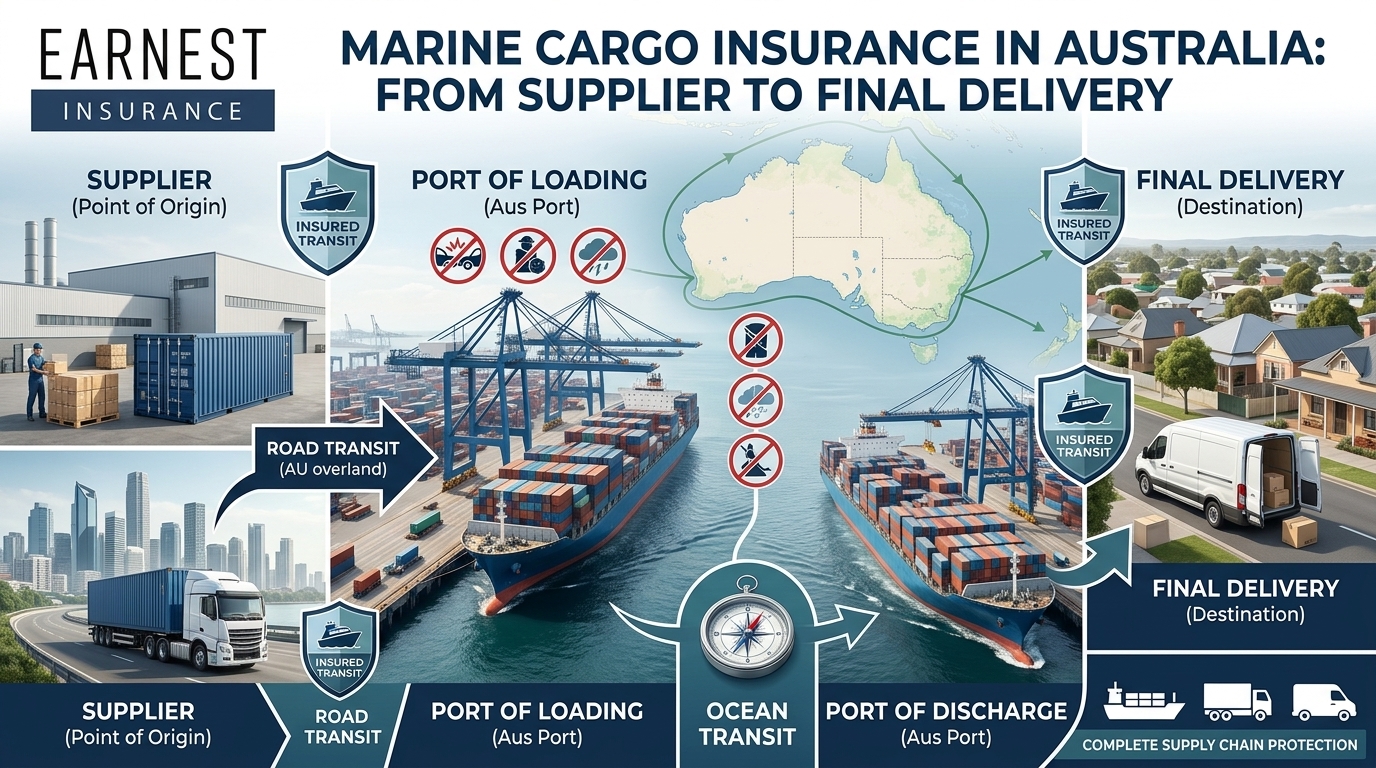
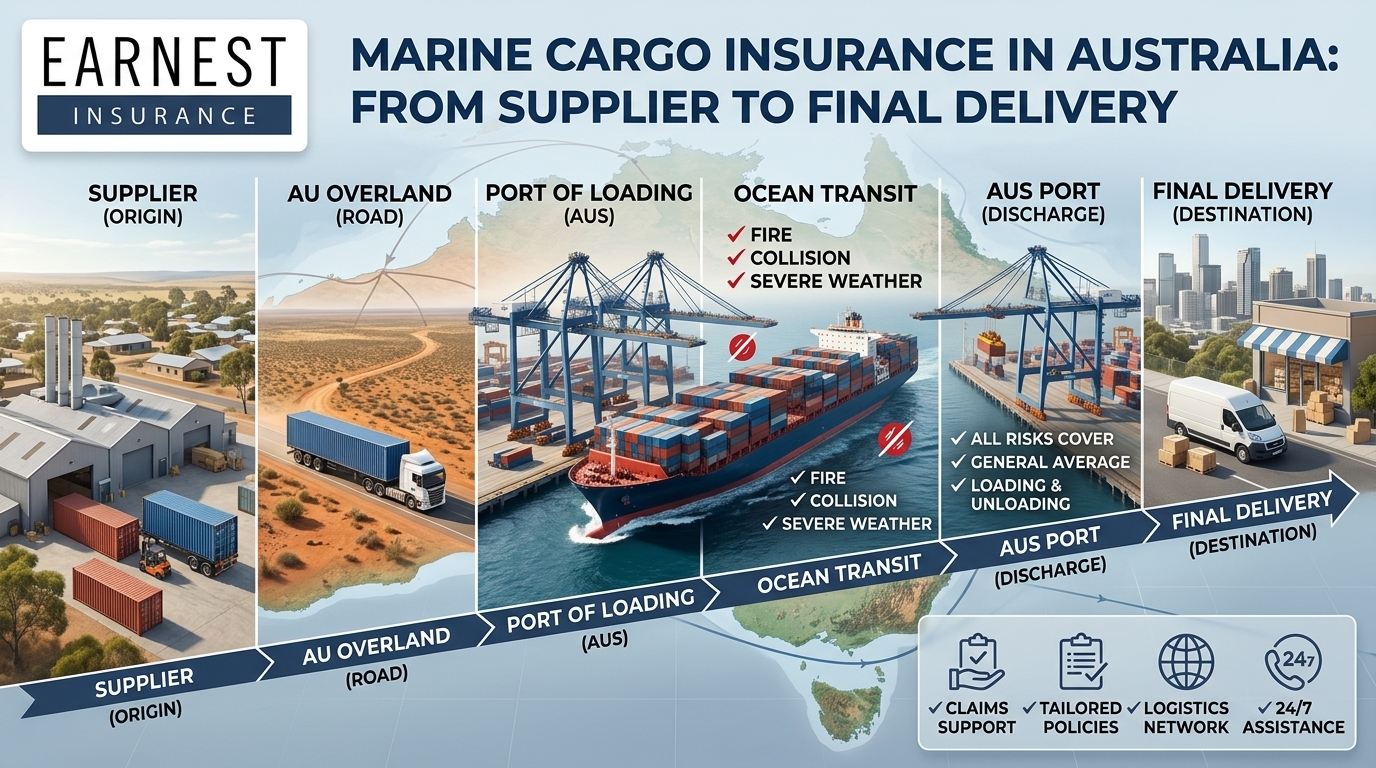
Marine Cargo Insurance in Australia: From Supplier to Final Delivery

Is Your Business Properly Insured? 10 Insurance Gaps Australian Businesses Should Check Before Renewal


How to Choose the Right Business, Construction, Truck, Bus and Marine Cargo Insurance in Australia


How to Choose the Right Business, Construction, Truck, Bus and Marine Cargo Insurance in Australia


How Much Is Public Liability Insurance in Melbourne? A 2026 Guide for Businesses


Business Insurance Broker Melbourne: How to Choose the Right Cover for Your Business


Business Insurance Broker Melbourne: How to Choose the Right Cover for Your Business

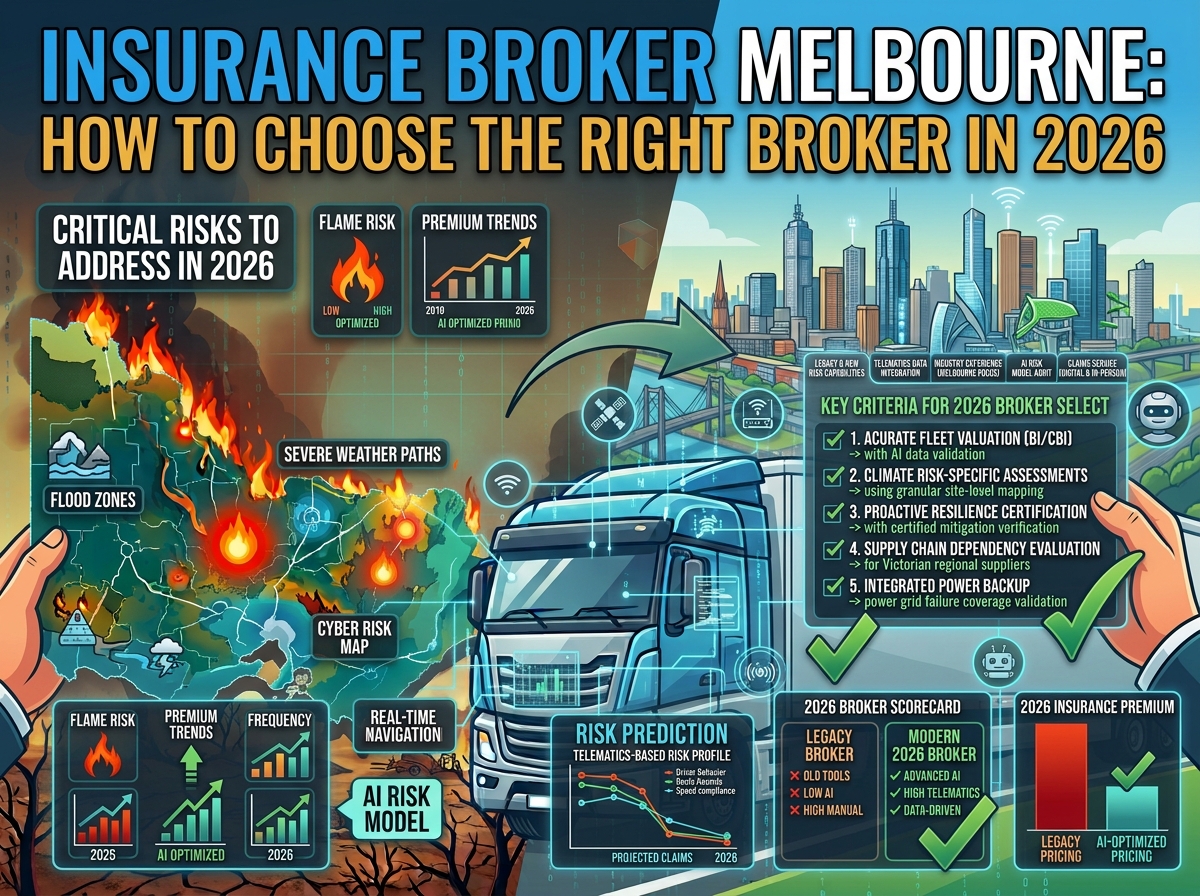
Insurance Broker Melbourne: How to Choose the Right Insurance Broker in 2026
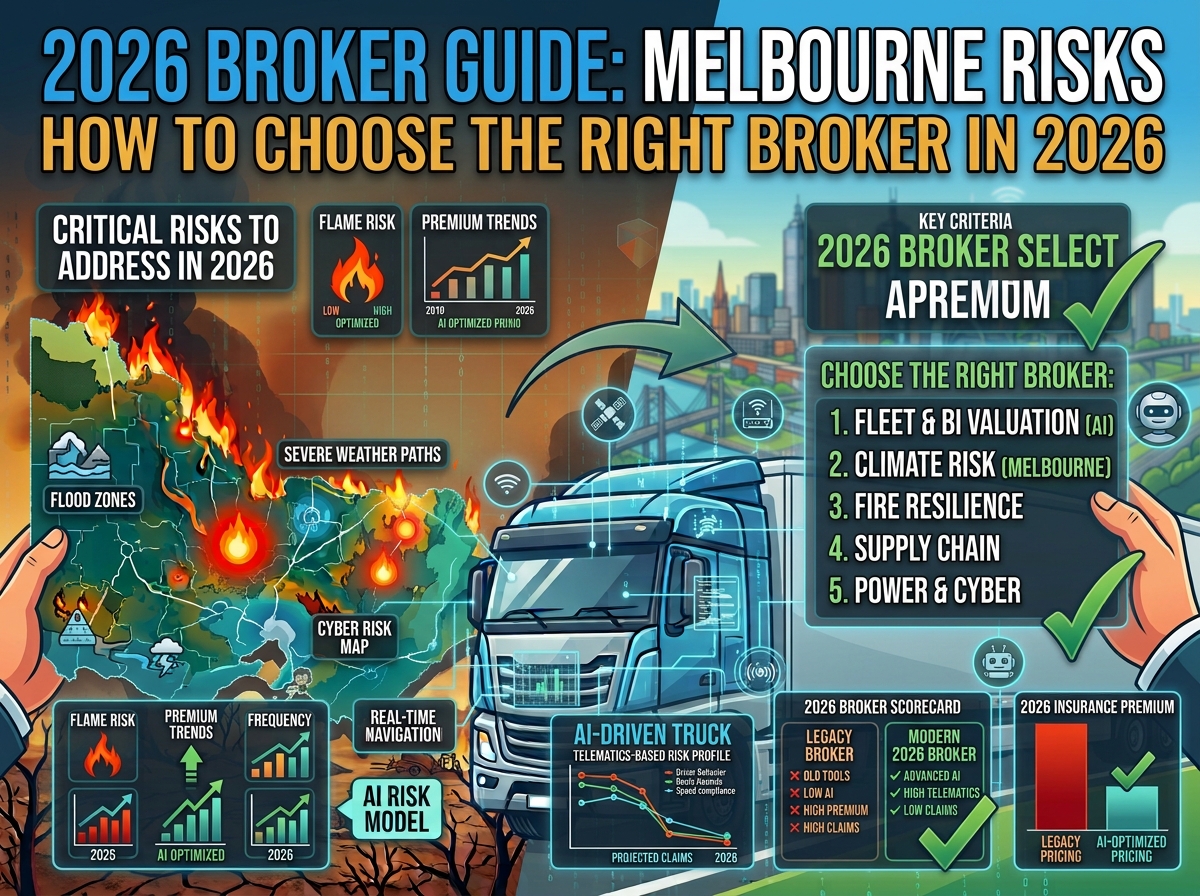

Truck Insurance Quote in 2026: How Telematics and AI Safety Technology Are Changing Truck Insurance in Melbourne


Truck Insurance Quote in 2026: What Melbourne Truck Operators Need to Know


Truck Insurance Quote: A Complete Guide to Truck Insurance in Melborune Australia
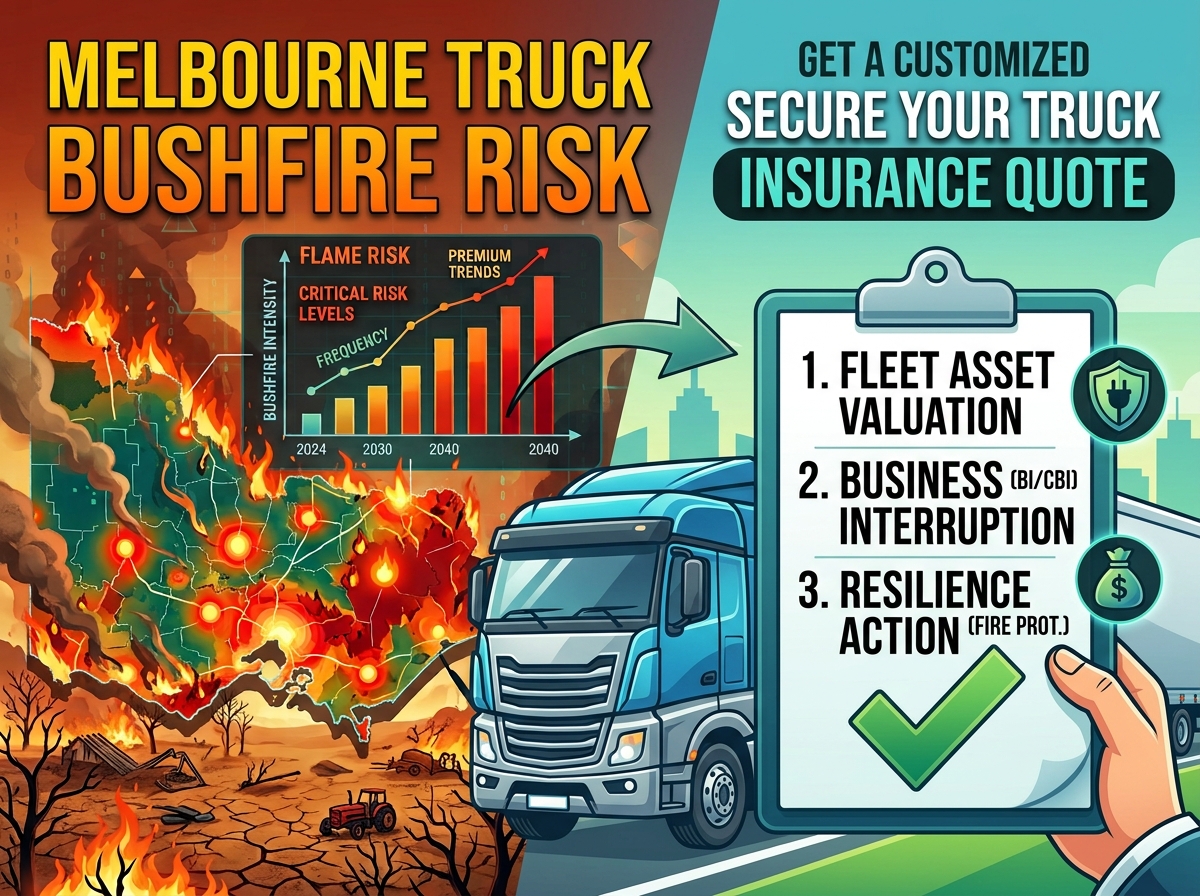
Bushfire & Climate Risk Insurance in Victoria: What Melbourne Businesses Should Review

Construction Insurance in Australia: What Every Builder, Tradie & Contractor Needs to Know


Cleaning Business Insurance Australia: Public Liability, Tools & Equipment Cover
A General Guide to Cargo & Marine Insurance

Types of Business Insurance: Liability & Directors Cover | Earnest Insurance

Sole Trader Public Liability Insurance | Costs & Cover

Everything You Need to Know About Small Truck Insurance

🏢 Commercial Property Insurance: What It Covers

Cafe & Coffee Shop Insurance

Insurance For Coffee Shops

Building & Construction Insurance Essentials


What you need to consider if you have a licensed venue

Insurance for the transport and logistics sector


What is really inside Business insurance?

Get in Touch
Have questions about insurance? Our expert brokers are here to help.