
Insurance Broker Melbourne: How to Choose the Right Insurance Broker in 2026
Choosing insurance can feel simple until you actually have to compare policies.
You search for an insurance broker Melbourne, get a long list of companies, open a few websites and start seeing terms such as public liability, professional indemnity, commercial property, business interruption, excess, exclusions and policy limits. Then the quotes start arriving, and suddenly it becomes difficult to work out whether you are comparing the same thing at all.
For a Melbourne business owner, the right insurance is not necessarily the policy with the lowest price. It is the cover that makes sense for the business, its assets, its people, its customers and the risks involved in operating in Victoria.
An experienced insurance broker in Melbourne can help make that process easier by understanding the business first and then helping compare suitable insurance options.
This is particularly useful for small businesses, sole traders, contractors and growing companies that may not have an internal risk or insurance team.
In this guide, we explain what an insurance broker does, what to look for when choosing insurance brokers Melbourne, how business insurance works, what questions to ask before getting an insurance quote Melbourne, and how local businesses can make better insurance decisions.
What Does an Insurance Broker in Melbourne Actually Do?
An insurance broker helps clients assess their insurance needs, understand available options and arrange suitable insurance.
The important word here is suitable.
A business owner may know that they need public liability insurance, but may not know whether they also need professional indemnity, commercial property, business interruption, cyber insurance or another type of cover.
A good insurance broker Melbourne starts with the business rather than starting with a particular policy.
For example, imagine two Melbourne businesses.
The first is an electrician who works at residential and commercial properties.
The second is an IT consulting company with employees working from an office and remotely for clients across Australia.
Both may need business insurance, but their risks are completely different.
The electrician may be concerned about accidental property damage, public liability and work performed at customer premises. The IT consultant may need to consider professional indemnity, cyber risks, contractual obligations and business interruption.
That is why insurance should be based on the actual business rather than a generic checklist.
Business Victoria explains that an insurance broker can assess a business's risks and help secure the insurance it needs.
Why Use Insurance Brokers Melbourne Instead of Comparing Policies Yourself?
There is nothing wrong with researching insurance yourself.
In fact, doing some research before speaking to a broker is a good idea.
The problem usually appears when you begin comparing policies that look similar but have different limits, exclusions and conditions.
A broker can help you understand those differences.
For example, one policy might cost less but have a higher excess. Another might have a broader wording for a particular business activity. A third might have a different approach to property, liability or business interruption.
The headline premium does not tell the whole story.
An insurance broker Melbourne can help you look at the complete picture.
A broker can help with:
Understanding the risks of your business.
Identifying types of insurance that may be relevant.
Comparing available policy options.
Explaining limits and exclusions.
Reviewing your existing insurance.
Helping with renewals.
Assisting with claims processes where the broker provides that service.
Updating insurance when the business changes.
The relationship can also become more useful as the business grows.
A small business that starts with one location, a few employees and a simple operation may later add vehicles, equipment, employees, contracts, property or new services.
The insurance should evolve with it.
What Should You Look for in an Insurance Broker Melbourne?
Not every broker will be the right fit for every business.
When searching for an insurance broker near me Melbourne, look beyond whether the broker appears at the top of a search result.
The right questions are more practical.
1. Does the broker understand your industry?
Insurance for an accountant is different from insurance for a builder.
A café has different risks from a manufacturer.
A property investor has different requirements from a technology company.
Ask whether the broker regularly handles businesses similar to yours.
Industry experience can make the discussion easier because the broker may already understand the common risks and questions associated with that type of business.
2. Does the broker ask questions before recommending cover?
This is one of the simplest things to notice.
If someone immediately recommends a policy without asking about your business, be careful.
A proper conversation should cover things such as:
What does your business do?
Where do you operate?
Who are your customers?
Do you employ people?
Do you rent or own your premises?
What equipment do you have?
Do you use vehicles?
Do you work at customer locations?
What contracts do you have?
Have you had previous claims?
A recommendation should make sense after those questions have been answered.
3. Can the broker explain the policy in plain English?
Insurance documents contain important details, but they are not always easy to read.
A good insurance broker in Melbourne should be able to explain what a policy is designed to cover, what it does not cover, what the major limits are and what information the insurer needs.
You should feel comfortable asking:
“Can you explain that without the insurance terminology?”
A useful broker should be able to do exactly that.
Insurance Broker Melbourne CBD vs a Broker Serving Greater Melbourne
Many people searching for an insurance broker Melbourne CBD are looking for a broker close to their office.
Location can be useful, but it should not be the only deciding factor.
A Melbourne CBD business may have customers, suppliers, employees or assets across the wider metropolitan area. A broker who understands Melbourne's broader business environment may be more useful than one selected purely because its office is a few minutes away.
For example, a company based in the Melbourne CBD may have:
- A warehouse in the western suburbs
- Employees working remotely
- Equipment stored elsewhere
- Customers throughout Victoria
- Contractors working interstate
The insurance conversation should reflect the whole operation.
For businesses specifically looking for a business insurance broker Melbourne CBD, it is worth asking whether the broker regularly works with businesses across the Melbourne metropolitan area rather than only CBD-based companies.
Earnest Insurance currently lists both a Melbourne CBD office at 315b, Level 3, 480 Collins Street, Melbourne VIC 3000, and a Pakenham office.
What Is Business Insurance Melbourne Businesses Actually Need?
There is no single business insurance package that is correct for every company.
The right combination depends on what the business does and the risks it faces.
Common types of business insurance include:
Public Liability Insurance
This can respond to certain claims involving third-party injury or property damage arising from business activities, subject to the policy wording.
For many trades, contractors, retailers, hospitality businesses and service businesses, public liability is an important part of their risk-management strategy.
A Melbourne business may therefore search for:
public liability insurance Melbourne
or
public liability insurance broker Melbourne
The right liability limit depends on the business and its circumstances. Some customers, landlords, contracts or industry arrangements may also require a particular level of liability cover.
Professional Indemnity Insurance
Professional indemnity insurance is relevant to businesses that provide professional advice, services or expertise.
Examples can include:
- Consultants
- Accountants
- Engineers
- Architects
- Designers
- Technology professionals
- Marketing professionals
- Financial professionals
- Other professional service providers
Businesses often search for professional indemnity insurance Melbourne when contracts or professional risks make this type of protection important.
Commercial Property Insurance
If you own commercial property, equipment, stock or business contents, commercial property insurance may be relevant.
The appropriate arrangement can depend on whether you own the building, lease the premises, operate from an office, run a warehouse, manage a retail location or use specialised equipment.
Business Interruption Insurance
A business can suffer financially even when the physical damage itself is covered.
For example, a fire or other insured event could prevent a business from operating normally.
Business interruption insurance may provide protection for certain financial losses resulting from an insured interruption, depending on the policy.
Cyber Insurance
Cyber risk is no longer limited to large technology companies.
Small businesses can also face phishing attacks, ransomware, data breaches, payment fraud and other cyber incidents.
Cyber insurance may help with certain costs depending on the cover.
Commercial Motor Insurance
Businesses using vehicles as part of their operations need to make sure the insurance reflects commercial use.
This can be particularly relevant for trades, couriers, transport operators, sales teams and businesses with company vehicles.
Small Business Insurance Melbourne: What Owners Often Miss
Small businesses are sometimes more exposed to risk than their owners realise.
That does not mean every small business needs every type of insurance.
It means the owner should understand what could cause a serious financial problem.
Consider a Melbourne café.
The owner might think about fire and theft.
But there may also be questions around:
- Public liability
- Business contents
- Stock
- Glass
- Equipment breakdown
- Business interruption
- Cyber incidents
- Employee-related risks
- Property damage
- Customer injuries
Now consider a small consulting firm.
Its most important asset may not be physical property at all.
The primary risks could involve professional advice, contractual obligations, cyber incidents and allegations that the business's work caused a financial loss.
This is why small business insurance Melbourne should be treated as a risk assessment rather than a simple shopping exercise.
Small Business Insurance Broker Melbourne: When a Broker Can Be Valuable
A small business owner may not have time to read dozens of policy documents.
They are already managing sales, staff, customers, invoices, suppliers, tax, marketing and day-to-day operations.
An experienced small business insurance broker Melbourne can become a practical point of contact for the insurance side of the business.
The broker can review the risks with the owner and help identify areas that need attention.
This can be particularly useful when a business is growing.
For example:
A sole trader becomes a company.
The company hires its first employee.
The business signs a larger customer contract.
The business moves into a commercial premises.
New equipment is purchased.
The business begins working interstate.
The company starts storing customer data.
Any of those changes could justify an insurance review.
How to Compare an Insurance Quote Melbourne Businesses Receive
Getting an insurance quote Melbourne business owners can understand is more important than simply getting a number.
When comparing quotes, look at the following.
Premium
How much will the policy cost?
Excess
How much will the business have to contribute when making a claim?
Policy limits
Is the level of cover appropriate for your business?
Exclusions
What situations are specifically excluded?
Business activities
Does the policy accurately describe what you do?
Territory
Where does the business operate?
Contract requirements
Do important customers or landlords require specific insurance limits?
Valuations
Are property, stock and equipment values accurate?
A cheaper policy may not necessarily be the better option if it leaves a significant gap in protection.
Why the Cheapest Insurance Quote Is Not Always the Best Quote
Imagine two public liability policies.
Policy A costs $1,200.
Policy B costs $1,500.
At first glance, Policy A looks better.
But then you discover that the policies have different limits, excesses and conditions.
The $300 difference may not tell you much.
This is why a broker should explain what you are actually getting for the premium.
The goal is not to spend as much as possible.
It is to avoid paying for irrelevant cover while also avoiding a major gap that could become expensive later.
What Questions Should You Ask an Insurance Broker?
When speaking with an insurance broker Melbourne, ask direct questions.
“What risks do you think are most important for my business?”
This helps determine whether the discussion is actually tailored to you.
“What policies are essential and which are optional?”
This can help separate necessary cover from additional protection.
“What are the biggest exclusions?”
The exclusions are often just as important as the benefits.
“How much liability cover should I consider?”
The answer depends on your industry, contracts and exposure.
“What happens if my business changes?”
Ask how the policy should be updated if you add services, premises, employees or assets.
“Who should I contact if I need to make a claim?”
Understand how claims support works.
“Can you review my current policies?”
A policy review can sometimes identify duplicated or missing cover.
Is It Worth Changing Insurance Brokers?
Sometimes it is.
A business might consider changing its broker when:
- Communication has become difficult.
- The broker no longer understands the business.
- Policies have not been reviewed as the business changes.
- Renewals feel like an automatic process.
- Explanations are unclear.
- Claims support has been disappointing.
- The business has grown significantly.
But switching should be based on service and suitability, not just a promise of a lower premium.
A good broker relationship should become more valuable as the business becomes more complex.
What Is Changing for Insurance Brokers in 2026?
There is an interesting development happening across the Australian broking industry.
The National Insurance Brokers Association, NIBA, is currently reviewing its Insurance Brokers Code of Practice.
NIBA published a draft revised 2027 Code of Practice in July 2026 and is consulting on the proposed changes. The current Code continues to set standards around professionalism, integrity, fairness and client service while the review process progresses.
NIBA's review has included recommendations around areas such as disclosure, conflicts of interest, vulnerability, record keeping and how the Code applies to clients.
For customers, the broader message is useful:
Transparency matters.
When choosing an insurance broker Melbourne, ask how the broker explains remuneration, conflicts, policy options, claims support and the basis for recommendations.
You should understand what you are buying and why.
What Is Happening With Insurance Duty in Victoria?
There is also a current Victorian cost consideration.
The Victorian State Revenue Office says duty on qualifying business insurance premiums reduced to 7% from 1 July 2026, down from 8% in the previous financial year. The rate is scheduled to continue falling by one percentage point each financial year until qualifying business insurance duty is abolished from 1 July 2033.
However, this does not mean every insurance premium in Victoria is now charged at 7%.
The SRO explains that commercial motor and several other categories are not treated as “business insurance” for this specific staged reduction and non-business insurance remains subject to the applicable rate.
For a business owner, this is another reason not to rely on a generic online insurance calculator.
The actual policy, insurance class and premium structure matter.
How to Choose an Insurance Broker Near Me Melbourne
When searching Google for insurance broker near me Melbourne, it is tempting to choose the closest business.
Instead, use local search as the starting point and then assess the broker.
Look for:
Local presence
Does the broker understand Melbourne and Victoria?
Industry experience
Have they worked with businesses like yours?
Clear communication
Can they explain complicated policy terms?
Policy comparison
Can they help you understand differences between insurers?
Claims support
Will they assist when something goes wrong?
Review process
Do they revisit your insurance when your business changes?
Professional standards
Does the broker demonstrate a commitment to recognised industry standards?
Location is useful.
Expertise and service are more important.
What Makes a Good Business Insurance Broker Melbourne CBD?
If your business operates in the Melbourne CBD, you may have risks associated with offices, retail premises, professional services, landlords, contractors, customers and commercial leases.
A good business insurance broker Melbourne CBD should understand that the location is only one part of the story.
For example, a consulting business might have its office in Collins Street but work with customers throughout Australia.
A retailer may be based in the CBD but hold stock at an external warehouse.
A professional services firm may have employees working remotely from different Victorian suburbs.
The insurance conversation should cover the entire operation.
A Melbourne Insurance Broker Should Think Beyond the Policy
This is one of the biggest differences between simply purchasing insurance and properly managing risk.
Suppose you run a building company.
Your insurance conversation should not stop at public liability.
You may also need to think about contract works, tools and equipment, commercial vehicles, professional advice, subcontractors and business interruption.
Now consider a restaurant.
The conversation may involve public liability, property, equipment, stock, business interruption and other hospitality-specific risks.
Now consider an IT company.
Professional indemnity, cyber risk, business interruption and contractual exposures may become more important.
A good insurance broker Melbourne should be willing to have that wider conversation.
When Should a Business Review Its Insurance?
Do not wait for renewal if something significant changes.
Review your cover when:
- You move premises.
- You buy property.
- You hire employees.
- You buy expensive equipment.
- You add vehicles.
- You begin interstate work.
- You add a new service.
- Your revenue changes significantly.
- You sign large contracts.
- Your business structure changes.
- You experience a claim.
- Your risk profile changes.
An annual review is a good starting point, but significant changes should trigger an earlier conversation.
Insurance Broker Melbourne: A Practical Example
Consider a Melbourne-based digital marketing agency with six employees.
At first, the company works from a small office and provides marketing services.
A few years later, it has grown to 25 employees.
It now handles larger customer accounts, stores customer information online, uses contractors and signs more detailed service agreements.
The company has changed.
Its insurance needs may also have changed.
Professional indemnity becomes more relevant to contractual and professional-service risks.
Cyber insurance may deserve closer consideration.
Business contents and property values may have increased.
Business interruption exposure may be larger.
Employment and operational risks may have changed.
Simply renewing the original policy without reviewing those changes could leave the business with cover that no longer reflects the current operation.
That is where an insurance broker can add practical value.
Frequently Asked Questions About Insurance Brokers Melbourne
What does an insurance broker do?
An insurance broker helps assess business or personal insurance needs, explains insurance options and assists clients with arranging suitable policies.
Why use an insurance broker Melbourne?
A local broker can provide guidance based on the business's activities, location, industry and risks. They can also help compare policy options and explain important differences.
How do I find the best insurance broker Melbourne?
Look for relevant industry experience, clear communication, transparent service, appropriate professional standards and a willingness to understand your business before recommending cover.
Can an insurance broker help small businesses?
Yes. Small businesses can benefit from a broker when they need help identifying appropriate business insurance, comparing policies or reviewing existing cover.
What does a business insurance broker Melbourne do?
A business insurance broker helps businesses assess commercial risks and arrange insurance such as public liability, professional indemnity, property, business interruption and other relevant covers.
Can I get an insurance quote Melbourne online?
Many brokers and insurers offer online quote forms. For more complex business risks, additional information may be required before a meaningful quotation can be prepared.
Should I choose an insurance broker near me Melbourne?
Local availability can be useful, but it should not be the only consideration. Experience, service, communication and understanding of your business are equally important.
Is a Melbourne CBD insurance broker better for a CBD business?
Not necessarily. A CBD location can be convenient, but the quality of the broker's industry knowledge and service is more important than office location alone.
What is public liability insurance Melbourne?
It is business insurance designed to respond to certain third-party injury or property-damage liabilities arising from covered business activities, subject to the policy terms and exclusions.
How much business insurance do I need?
There is no single amount that works for every business. It depends on your industry, turnover, assets, contracts, activities and particular risks.
Can I change my insurance broker?
Businesses can review their broker arrangements and consider changing providers where appropriate. Check any existing terms of engagement and make sure important insurance arrangements remain continuous during a transition.
Choosing the Right Insurance Broker for Your Melbourne Business
The best relationship with an insurance broker should not feel like a yearly transaction.
You should be able to contact the broker when your business changes and ask:
“Does this affect my insurance?”
That question can be surprisingly important.
Opening another location may change your property exposure.
Hiring employees can change your risk.
Starting to provide advice can create professional liability considerations.
Buying vehicles can create commercial motor requirements.
Signing a major contract may introduce new insurance conditions.
Expanding into another state can change the territory of your operations.
A broker who understands your business can help you recognise when an insurance review is worthwhile.
Why Earnest Insurance for Melbourne Businesses?
Earnest Insurance positions itself as a general insurance brokerage serving businesses and individuals across Australia, with services including business insurance, public liability, professional indemnity, cyber, landlord, marine, strata and commercial property insurance.
The business lists a Melbourne CBD location at 480 Collins Street, alongside its Pakenham office, making it relevant for businesses searching for an insurance broker Melbourne, insurance broker Melbourne CBD or business insurance broker Melbourne.
For businesses considering insurance options, the starting point should be a conversation about the actual risks rather than a particular product.
The right insurance can look different for a sole trader, a professional services company, a construction business, a restaurant, a manufacturer, a property owner or a technology company.
Get an Insurance Quote in Melbourne
Choosing insurance does not have to be complicated.
Start with the basics.
Explain what the business does.
Explain where it operates.
Explain what you own.
Explain who you work with.
Explain what could cause a serious financial loss.
Then compare the insurance options that make sense for those risks.
Whether you are searching for an insurance broker Melbourne, insurance brokers Melbourne, commercial insurance Melbourne, small business insurance Melbourne, public liability insurance Melbourne or an insurance quote Melbourne, the same principle applies:
Choose cover based on the business you actually operate—not the business you had several years ago.
For Melbourne and Victorian businesses, an insurance review can be a useful opportunity to check whether your current policies, limits and exclusions still fit.
Earnest Insurance can help businesses review their insurance requirements and explore available commercial and personal insurance options.
Request an insurance quote and speak with an insurance professional about your business, industry and specific coverage needs.
Final Takeaway
Finding the right insurance broker Melbourne should be about more than finding the lowest premium.
A good broker should understand your business, explain your options clearly and help you identify where your insurance may need attention.
For a small business, that might mean public liability.
For a consultant, professional indemnity may be more important.
For a property owner, commercial property insurance could be central.
For a growing company, cyber, business interruption and broader commercial risks may deserve attention.
And for businesses in the Melbourne CBD, the suburbs or wider Victoria, local knowledge can make the conversation more relevant.
The insurance market and professional standards are continuing to evolve. NIBA is currently progressing a review of its Insurance Brokers Code of Practice, with a draft 2027 Code released in July 2026 for consultation.
Victoria is also continuing its staged reduction of duty on qualifying business insurance premiums, with the rate at 7% for contracts effected or renewed from 1 July 2026 to 30 June 2027.
For business owners, these developments are reminders that insurance is not something to buy once and forget.
Review it.
Ask questions.
Understand what you are paying for.
And make sure the policy continues to match the business.
General information only. Insurance products, premiums, eligibility, exclusions, limits and conditions vary between insurers. Consider the relevant Product Disclosure Statement and seek advice appropriate to your circumstances before making an insurance decision.
Subscribe to our newsletter
Related posts
More Blog Posts
Insurance Broker Melbourne: How to Choose the Right Insurance Broker in 2026

Truck Insurance Quote in 2026: How Telematics and AI Safety Technology Are Changing Truck Insurance in Melbourne


Truck Insurance Quote in 2026: What Melbourne Truck Operators Need to Know


Truck Insurance Quote: A Complete Guide to Truck Insurance in Melborune Australia
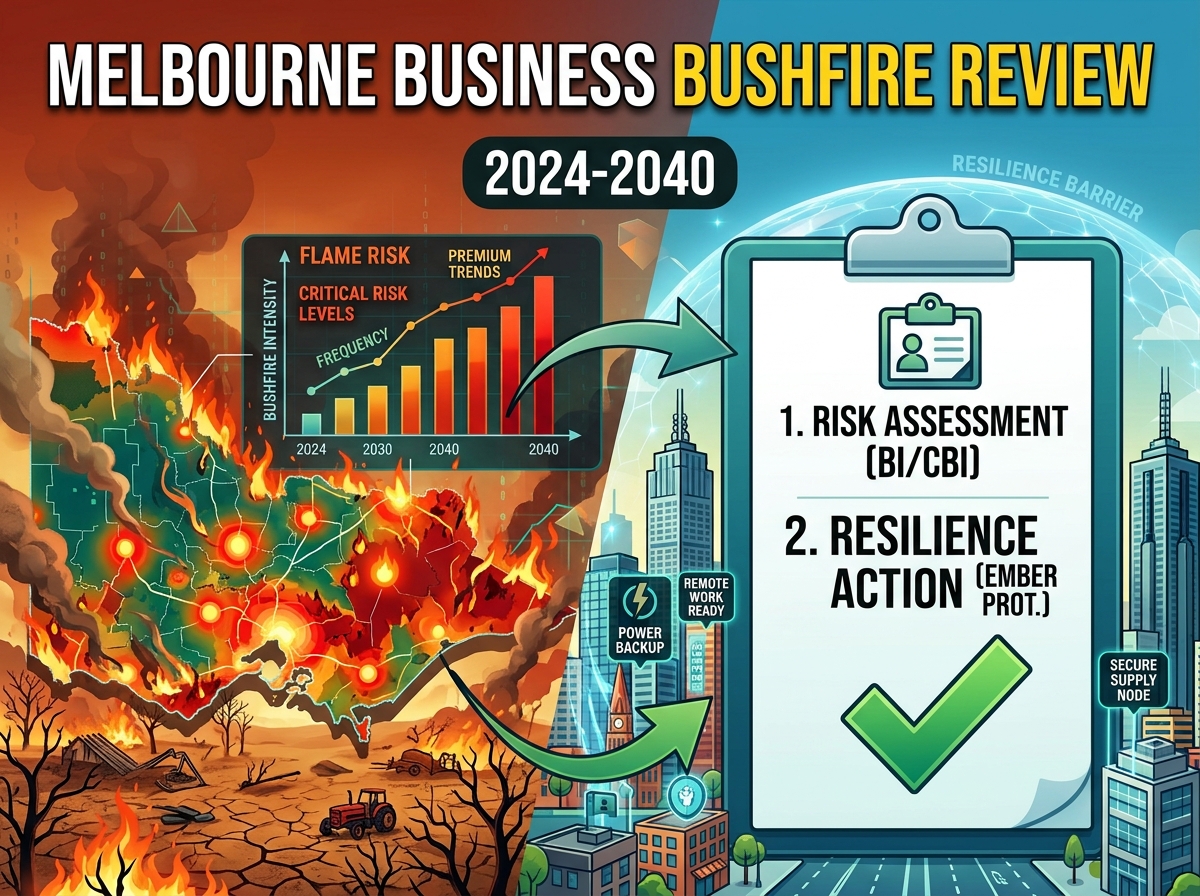
Bushfire & Climate Risk Insurance in Victoria: What Melbourne Businesses Should Review
.png)
Construction Insurance in Australia: What Every Builder, Tradie & Contractor Needs to Know

Cleaning Business Insurance Australia: Public Liability, Tools & Equipment Cover

A General Guide to Cargo & Marine Insurance

Types of Business Insurance: Liability & Directors Cover | Earnest Insurance

Sole Trader Public Liability Insurance | Costs & Cover

Everything You Need to Know About Small Truck Insurance

🏢 Commercial Property Insurance: What It Covers

Cafe & Coffee Shop Insurance

Insurance For Coffee Shops
.jpg)
Building & Construction Insurance Essentials
.jpg)

What you need to consider if you have a licensed venue

Insurance for the transport and logistics sector


What is really inside Business insurance?

Get in Touch
Have questions about insurance? Our expert brokers are here to help.