
Business Insurance Broker Melbourne: How to Choose the Right Cover for Your Business


Choosing business insurance is one of those jobs most business owners know they need to do, but rarely have time to enjoy.
You are busy running the business, looking after customers, managing staff, paying suppliers and trying to keep the numbers moving in the right direction. Then someone asks whether you have public liability insurance, professional indemnity, property cover or business interruption insurance, and suddenly you have another list of things to understand.
That is where a business insurance broker Melbourne can be useful.
The right broker should not simply hand you a policy and tell you to sign it. They should first understand what your business does, what could go wrong, what you own, where you operate and what your customers or contracts require. From there, they can help you compare insurance options that are relevant to your business.
For a Melbourne business, that local context can matter. A café in Richmond, a manufacturer in Dandenong, a professional services firm in the Melbourne CBD and a builder working across Victoria all face different risks.
This guide explains how business insurance Melbourne works, what a broker can actually do for you, which covers are commonly considered, how to compare quotes and what to check before choosing an insurance broker.
What Does a Business Insurance Broker Melbourne Actually Do?
A business insurance broker Melbourne helps businesses understand and arrange insurance based on their particular risks.
The important part is the word business.
There is no single business insurance policy that suits every company.
An electrician, accountant, café owner, manufacturer, property investor and IT consultant may all need different combinations of cover.
Business Victoria explains that insurance needs depend on the type of business and highlights areas including public liability, professional indemnity, product liability, vehicle insurance, property and assets, revenue insurance and personal accident cover. It also recommends professional advice where businesses need help assessing their risks.
A broker may help with that assessment and then approach suitable insurers or insurance markets.
The process should start with questions such as:
What does your business do?
Where does it operate?
What property or equipment do you own?
Do customers visit your premises?
Do you work at customer sites?
Do you employ people?
Do you use subcontractors?
Do you sell or manufacture products?
Do you give professional advice?
Do you use vehicles?
What contracts have you signed?
Have you had previous claims?
Those questions are much more useful than simply asking, “How much is insurance?”
Business Insurance Melbourne Is Not One-Size-Fits-All
One of the biggest mistakes small businesses make is assuming that every business needs the same insurance package.
Take three Melbourne businesses.
Example 1: A Melbourne Electrician
An electrician might spend most of the working day travelling between customer properties.
Public liability can be important because work takes place around other people's property.
The business may also need protection for tools and equipment, commercial vehicles and other risks associated with the way the electrician operates.
Example 2: A Melbourne Café
A café has very different exposures.
Customers enter the premises every day. There is kitchen equipment, food, stock, refrigeration, glass, furniture and potentially employees.
Business insurance for the café may need to consider public and product liability, property, equipment and business interruption, among other risks.
Example 3: A Melbourne IT Consultancy
An IT consultancy may have relatively little physical stock compared with a retailer.
Its bigger concerns could involve professional services, contractual obligations, cyber incidents, data and business interruption.
This is why a good business insurance broker Melbourne should ask about the business before recommending a policy.
Why Use a Business Insurance Broker Instead of Buying Direct?
Going directly to an insurer can work for some straightforward insurance needs.
A business owner may also be comfortable researching policies online.
But business insurance can become complicated very quickly.
Different policies can use different wording, limits, exclusions and excesses. Two policies may appear similar on the surface and still respond differently when something goes wrong.
Business Victoria notes that insurance brokers can assess business risks and help businesses secure appropriate insurance. It also distinguishes brokers from insurance agents in terms of who they represent.
A broker can therefore be particularly helpful when:
- Your business has several different risks.
- You operate across multiple locations.
- You have employees or contractors.
- You need several types of insurance.
- You have specific customer contracts.
- You have experienced previous claims.
- You are expanding.
- You are unsure whether your existing cover still fits.
The benefit should not simply be “getting a cheaper quote.”
A useful broker should help you understand what you are buying.
What Should a Melbourne Business Insurance Broker Ask You?
You can learn a lot about a broker by the questions they ask.
A strong first conversation should feel more like a business discussion than a sales pitch.
For example, a broker might ask:
What does your business actually do?
Not just the name of the industry.
A “construction company” could be a builder, subcontractor, civil contractor, project manager or specialist installer.
Those businesses can have different exposures.
Where do you work?
Your business may be located in Melbourne but operate throughout Victoria or Australia.
That matters.
Who are your customers?
You might work with consumers, government, other businesses, property owners, builders or major contractors.
What assets do you own?
Think about:
- Buildings
- Stock
- Machinery
- Tools
- Computers
- Furniture
- Vehicles
- Specialised equipment
What could cause the business to stop trading?
This is one of the most useful questions.
For some businesses, losing a building could be the biggest threat.
For others, losing computer systems, equipment, professional capability or a key vehicle could be more serious.
Understanding the answer helps shape a better insurance conversation.
What Types of Business Insurance Melbourne Businesses Commonly Consider?
There is no universal checklist, but several types of insurance appear frequently in business discussions.
Public Liability Insurance
Public liability insurance may help respond to certain claims involving injury to third parties or damage to third-party property arising from covered business activities.
It is commonly relevant to trades, retailers, hospitality businesses, contractors and many service businesses.
A business may search for:
public liability insurance Melbourne
or
public liability insurance broker Melbourne
The appropriate limit depends on the business and its activities.
Some customers, landlords, project owners and contracts may also require a specified limit.
Professional Indemnity Insurance
Professional indemnity insurance can be relevant to businesses that provide professional advice, services or expertise.
This may include:
- Accountants
- Consultants
- Architects
- Engineers
- Designers
- IT professionals
- Marketing consultants
- Advisers
- Other professional service providers
The potential risk is not necessarily physical damage.
A client may allege that professional advice, work or services caused them a financial loss.
Commercial Property Insurance
If you own or occupy a commercial property, you may need to consider insurance for buildings, contents, equipment or other business assets.
Business Victoria notes that premises, contents and equipment can represent important business assets and that insurance can help businesses recover after events such as fire, theft or storm damage.
This can be particularly relevant for Melbourne:
- Warehouses
- Shops
- Offices
- Factories
- Workshops
- Medical practices
- Cafés
- Restaurants
Business Interruption Insurance
The damage to your building may not be the only financial problem after an insured event.
A business could also lose income while it is unable to operate normally.
Business interruption or revenue insurance may respond to certain covered interruptions, depending on the policy.
Business Victoria specifically identifies revenue insurance as a type of cover that can help with reduced profits caused by covered interruptions.
Product Liability Insurance
If your business manufactures, imports, distributes or sells products, product liability can become an important part of the conversation.
A product-related claim can create costs beyond the value of the original product.
The right cover depends on the type of products, how they are supplied and the business's role in the supply chain.
Cyber Insurance
Cyber risk is now relevant to far more businesses than technology companies.
A small Melbourne business may store:
- Customer information
- Payment information
- Employee records
- Passwords
- Contracts
- Financial information
A cyber event could interrupt operations even if there is no physical damage to the premises.
Cyber insurance can address certain cyber-related risks, subject to the policy.
Commercial Motor Insurance
If vehicles are used for business purposes, make sure the insurance reflects commercial use.
This may be particularly important for:
- Tradies
- Couriers
- Transport businesses
- Sales teams
- Contractors
- Delivery businesses
Earnest's existing service portfolio includes commercial and specialist insurance categories such as truck, bus and coach, marine, construction, cyber, strata and commercial property insurance.
Small Business Insurance Melbourne: What Changes as Your Business Grows?
A policy that made sense when the business had three employees may not be appropriate when it has twenty.
Growth can change the risk profile in ways that are easy to overlook.
Imagine a Melbourne cleaning company.
It starts with one owner, two employees and a small van.
Three years later, it has ten teams, several vehicles, commercial contracts and a small office.
The business has changed considerably.
There are more employees.
There are more vehicles.
There are more contracts.
There is more equipment.
There may be greater revenue exposure.
Customers may require higher liability limits.
At renewal time, the owner should not simply continue with last year's information.
A small business insurance Melbourne review should reflect the current business.
Business Insurance Broker Melbourne CBD: Does Location Matter?
Searching for a business insurance broker Melbourne CBD makes sense if your business is located in the city.
But your physical office address is only part of the picture.
A Melbourne CBD professional services firm might have:
- Staff working remotely
- Clients across Australia
- Contractors in other states
- Cloud systems hosted elsewhere
- Equipment stored outside the CBD
Likewise, a CBD retailer may have stock at another warehouse.
The insurance should follow the business operations, not simply the postcode.
Earnest Insurance lists a Melbourne CBD office at 315b, Level 3, 480 Collins Street, Melbourne VIC 3000, as well as a Pakenham office.
For a business insurance broker Melbourne CBD search, local availability can be useful, but experience and understanding of the business remain more important than proximity alone.
Commercial Insurance Broker Melbourne: When Your Business Becomes More Complex
As a business grows, simple packaged insurance may no longer answer every question.
A larger business may have:
- Multiple premises
- More employees
- Larger contracts
- Higher liability exposure
- More vehicles
- More stock
- Specialised equipment
- Interstate activities
- International suppliers
- Complex professional risks
This is where a commercial insurance broker Melbourne can become particularly valuable.
The discussion may shift from individual policies to a broader insurance program.
The broker may review how the various covers work together and identify potential gaps or overlaps.
For example, a manufacturing business may need to consider:
Property + machinery + business interruption + public liability + product liability + cyber + motor + other specialist risks.
A construction business may need a different combination.
A technology company may have a different risk profile again.
The point is not to buy every available insurance product.
The point is to understand the risks that could materially affect the business.
How to Compare a Business Insurance Quote Melbourne Businesses Receive
A business insurance quote Melbourne business owners receive should never be judged by premium alone.
Look at the complete proposal.
What to compareWhy it mattersPremiumThe annual or agreed costExcessWhat the business may pay toward a claimPolicy limitsMaximum amount payable for covered lossesExclusionsSituations the policy does not coverBusiness descriptionWhether your actual activities are correctly statedTerritoryWhere the business and work are coveredAssetsWhether current values are accurateConditionsRequirements that must be followedEndorsementsSpecial changes to standard policy wordingClaims processHow claims are reported and managed
A quote that is $500 cheaper is not necessarily better if it creates a significant coverage gap.
Likewise, paying for cover you do not need is not efficient either.
The aim is appropriate protection.
Why Your Business Description Matters More Than You Think
When you arrange business insurance, one of the most important pieces of information is how you describe the business.
Consider a company that describes itself simply as:
“Electrical contractor.”
That may not tell the insurer enough.
Does the business work in:
- Residential properties?
- Commercial buildings?
- Industrial sites?
- Construction projects?
- High-voltage environments?
- Restricted access areas?
Does it employ workers?
Does it use subcontractors?
Does it store equipment?
Does it import components?
Does it provide design or professional advice?
The detail matters because insurance is based on the risk being presented.
A good business insurance broker Melbourne should help you make sure the business description accurately represents what you actually do.
What About Employees and WorkCover in Victoria?
Business insurance should not be confused with statutory workers' compensation.
In Victoria, WorkCover insurance is compulsory for almost all employers, with exemptions and thresholds applying in specific situations. WorkSafe Victoria's current guidance says generally employers must register where they employ workers, subject to the applicable requirements and exemptions.
This is important because a business owner might assume that public liability insurance covers workplace injuries to employees.
It does not replace WorkCover.
WorkCover is part of the Victorian workers' compensation system.
A business insurance broker can help explain the difference between commercial insurance and other forms of statutory or specialist protection, but legal obligations should be confirmed with the relevant Victorian authority.
A 2026 Change Melbourne Business Owners Should Know About
There is also a current Victorian insurance-duty development worth understanding.
For qualifying business insurance contracts, the Victorian insurance duty rate is 7% for contracts effected or renewed from 1 July 2026 to 30 June 2027. The rate is scheduled to reduce progressively until qualifying business insurance duty is abolished from 1 July 2033.
However, this does not mean every insurance policy purchased by a Melbourne business now attracts a 7% duty rate.
The State Revenue Office explains that only certain insurance classes qualify as “business insurance” under the staged reduction, while other classes—including commercial motor—remain outside that special definition.
So if you receive a business insurance Melbourne quote, do not assume the total premium can be compared by simply applying one duty percentage.
The insurance class and policy structure matter.
How to Check Whether an Insurance Broker Is Properly Authorised
Trust matters when you are discussing business risks and financial products.
ASIC says an Australian financial services licence is required to conduct a financial services business unless an exemption applies or the person is authorised to provide services as a representative of another licence holder.
ASIC also explains that a Financial Services Guide can provide information about the services offered, remuneration and potential conflicts where the relevant disclosure requirements apply.
That gives a business owner some practical checks.
Before committing, ask:
Who is the licence holder?
Is the broker authorised to provide the service being offered?
Where can I find the Financial Services Guide?
How is the broker or intermediary paid?
Are there any relevant conflicts or relationships I should understand?
Who handles complaints?
These are normal questions, particularly when arranging commercial insurance.
What Does a Good Insurance Broker Do at Renewal?
Renewal should not be an automatic email saying:
“Your policy expires next month. Would you like to renew?”
A proper review should ask:
Has the business changed?
Have your revenue or assets changed?
Have you moved premises?
Have you hired people?
Have you added vehicles?
Have you changed suppliers?
Have you started offering new services?
Have customers introduced new contractual insurance requirements?
Have you made any claims?
Have you experienced incidents that did not become claims?
This is where a good broker relationship can become valuable.
The insurance should evolve with the business.
How Often Should You Review Business Insurance?
At least annually is a sensible starting point.
But waiting for renewal is not always appropriate.
Review your insurance when:
- Your business moves premises.
- You purchase significant equipment.
- You buy or sell vehicles.
- You employ more staff.
- Your revenue changes substantially.
- You introduce a new product.
- You start operating interstate.
- You sign a major contract.
- You acquire another business.
- You begin exporting.
- You start using subcontractors differently.
- Your business model changes.
The sooner an important change is discussed, the easier it is to determine whether the existing policy needs updating.
A Simple Melbourne Business Insurance Checklist
Before speaking with a business insurance broker Melbourne, make a basic list.
Business
What does the company do?
People
How many employees, contractors and directors are involved?
Premises
Do you own, lease or work from home?
Assets
What property, equipment and stock do you own?
Vehicles
What vehicles are used for business purposes?
Customers
Who buys from you?
Contracts
Do customers or landlords require certain insurance limits?
Territory
Do you operate only in Melbourne, across Victoria or nationally?
Revenue
What is the approximate annual turnover?
Claims
Have you had insurance claims or significant incidents?
You do not need to have every answer perfect before contacting a broker.
But having the basics ready can make the first conversation much more productive.
When Should You Consider Changing Your Insurance Broker?
There are situations where reviewing the broker relationship makes sense.
Perhaps the business has grown but the insurance still looks exactly the same.
Perhaps you cannot get a clear explanation of exclusions.
Perhaps communication is slow.
Perhaps your broker does not understand your industry.
Perhaps the renewal process feels like a formality rather than a review.
Or perhaps you simply want to see whether another broker can approach the market differently.
Changing brokers is a business decision, so check your current arrangements and make sure there is no gap between policies during any transition.
The goal is not to change brokers for the sake of changing.
The goal is to have insurance support that keeps up with your business.
What Is Changing in the Australian Insurance Broking Industry?
There is another reason to pay attention to the quality of your broker relationship in 2026.
The National Insurance Brokers Association is currently reviewing the Insurance Brokers Code of Practice. NIBA released a draft revised 2027 Code in July 2026 as part of the review process, with the aim of ensuring the Code remains fit for purpose as the regulatory and commercial environment changes.
The review has involved consultation with organisations including ASIC, AFCA, the Australian Small Business and Family Enterprise Ombudsman and consumer representatives.
For business owners, the practical lesson is simple:
Transparency and professional standards matter.
When you choose an insurance broker, you should understand the service being provided, how recommendations are made, how remuneration works where applicable, and what support is available if you need to make a claim or resolve a concern.
Business Insurance Melbourne: Questions to Ask Before You Buy
Here are some questions worth asking before accepting a policy.
“What are the biggest risks you see in my business?”
A good answer should relate specifically to your operations.
“Which covers are essential?”
You do not necessarily need every insurance product.
“Where could I have a coverage gap?”
This is often more useful than asking for the cheapest premium.
“What exclusions should I pay attention to?”
Every policy has conditions and exclusions.
“Are my insurance limits appropriate?”
The answer can depend on contracts, assets, turnover and potential liabilities.
“What happens when my business changes?”
You want a broker who understands that insurance is not static.
“Who will help me if I need to claim?”
Claims support can matter just as much as arranging the policy.
Business Insurance Broker Melbourne: The Human Side Still Matters
Insurance is becoming more digital.
Quotes can be requested online.
Documents can be emailed.
Policies can be purchased electronically.
Technology makes the process faster.
But business insurance is still about understanding risk.
A form may tell you that your business is a “retailer.”
A conversation can reveal that you import products, hold high-value stock, operate an online store, lease two warehouses and sell to customers across Australia.
That difference matters.
A good business insurance broker Melbourne should be interested in the story behind the answers.
They should understand what could actually hurt your business financially.
That is where human judgement can still add value.
Why Melbourne Businesses Should Think About Insurance Before They Need It
Nobody wants to think about a major claim.
A customer falls and suffers an injury.
A fire damages the premises.
A storm damages equipment.
A cyber incident stops the business from operating.
A product causes damage.
A professional client alleges that advice caused a loss.
A key piece of machinery stops working.
The question is not whether something bad will definitely happen.
Nobody can predict that.
The question is whether your business would be financially prepared if something did.
That is the real purpose of business insurance.
Get a Business Insurance Quote in Melbourne
Whether you run a one-person business or a growing company, the starting point is understanding your risks.
If you are searching for a business insurance broker Melbourne, business insurance Melbourne, commercial insurance broker Melbourne, small business insurance Melbourne, business insurance broker Melbourne CBD or a business insurance quote Melbourne, look for a broker who is prepared to understand how the business actually operates.
The right policy is not necessarily the cheapest policy.
It is also not necessarily the policy with the longest list of benefits.
It is the policy structure that makes sense for your business, your assets, your customers, your contracts and your risk.
Earnest Insurance provides business and commercial insurance services across Australia and lists Melbourne and Pakenham locations, with business insurance, public liability, professional indemnity, cyber, property and other specialist insurance options available.
The next step is straightforward.
Review what you already have.
Identify what has changed.
Ask questions.
Then compare your options.
Request a business insurance quote and discuss your Melbourne business, industry and specific insurance requirements with an insurance professional.
Frequently Asked Questions
What is a business insurance broker Melbourne?
A business insurance broker Melbourne helps businesses assess their insurance needs and compare or arrange suitable commercial insurance options based on their activities, assets and risks.
What does business insurance cover?
It depends on the policy. Business insurance may include areas such as public liability, property, business contents, business interruption, professional indemnity, product liability, cyber and commercial motor, depending on the business.
How much does business insurance cost in Melbourne?
There is no standard price. Premiums can vary according to the industry, business size, revenue, claims history, assets, activities, location, policy limits, excess and other factors.
What insurance does a small business need in Melbourne?
There is no universal package. A small business may need public liability, property, business interruption, professional indemnity, cyber, commercial motor or other specialist insurance depending on its operations.
Is a business insurance broker better than buying directly?
Not automatically. A broker can be useful when the risks are complex or you want help comparing and understanding different policy options. The right choice depends on your business and circumstances.
What is the difference between a commercial insurance broker Melbourne and a general broker?
The terminology varies between businesses. A commercial insurance broker typically focuses on business and commercial risks, while some brokers handle both business and personal insurance.
Does a Melbourne CBD business need different insurance?
Not necessarily. The insurance should reflect what the business does, where it operates and what it owns. A CBD business can have assets, employees and customers outside the CBD.
Do Victorian businesses need WorkCover?
WorkCover insurance is compulsory for most Victorian employers, subject to specific requirements and exemptions. WorkSafe Victoria should be used to confirm the current obligations for your business.
Does the 2026 Victorian insurance-duty reduction apply to every business policy?
No. The 7% rate from 1 July 2026 to 30 June 2027 applies to qualifying business insurance contracts. The State Revenue Office says other insurance classes, including commercial motor, are excluded from the special business-insurance definition.
What should I ask an insurance broker before buying?
Ask about coverage, exclusions, limits, excesses, business activities, claims support, remuneration or relevant disclosures, and what happens when your business changes.
Final Word
Running a business in Melbourne comes with enough uncertainty without adding uncertainty about your insurance.
A good insurance review does not have to be complicated.
Start with the business.
Look at what you own.
Look at what you do.
Look at who you work with.
Look at what could interrupt your income.
Then build your insurance around those risks.
That is the real value of a good business insurance broker Melbourne relationship.
It is not simply about finding a policy.
It is about understanding what you are protecting, why you are protecting it and whether the cover still makes sense as the business grows.
This article provides general information only and is not personal financial or insurance advice. Insurance products, eligibility, premiums, exclusions, limits, conditions and claims outcomes vary between insurers. Read the relevant Product Disclosure Statement and obtain advice appropriate to your circumstances before purchasing insurance.
Subscribe to our newsletter
Related posts
More Blog Posts
Business Insurance Broker Melbourne: How to Choose the Right Cover for Your Business
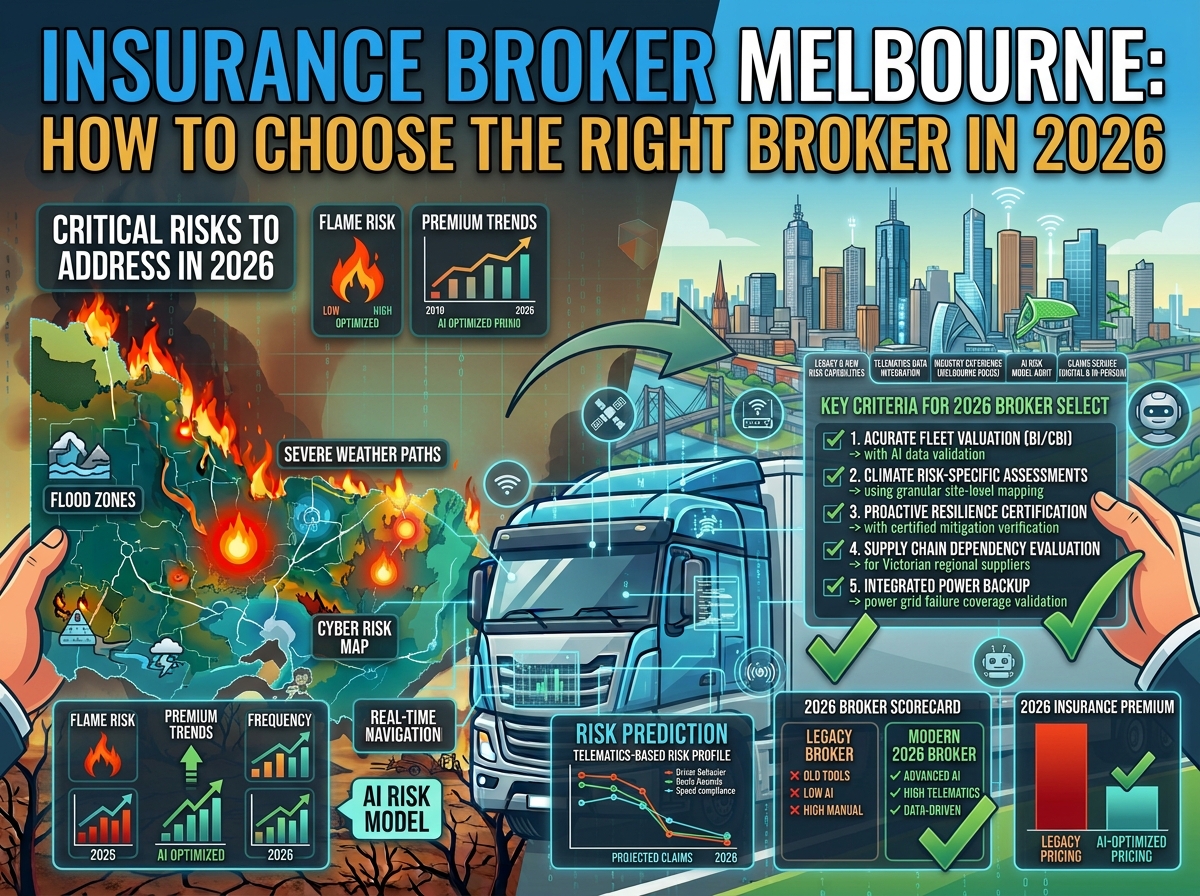
Insurance Broker Melbourne: How to Choose the Right Insurance Broker in 2026
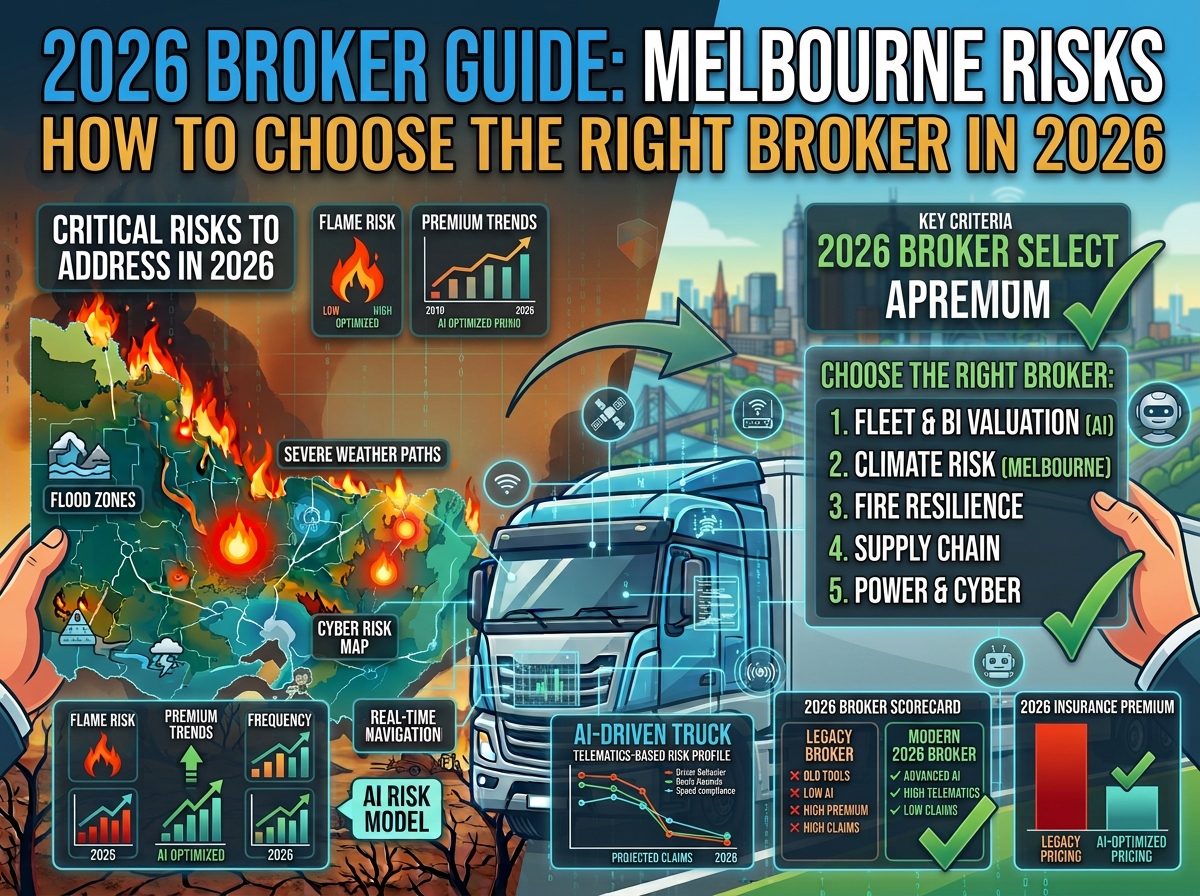

Truck Insurance Quote in 2026: How Telematics and AI Safety Technology Are Changing Truck Insurance in Melbourne


Truck Insurance Quote in 2026: What Melbourne Truck Operators Need to Know


Truck Insurance Quote: A Complete Guide to Truck Insurance in Melborune Australia
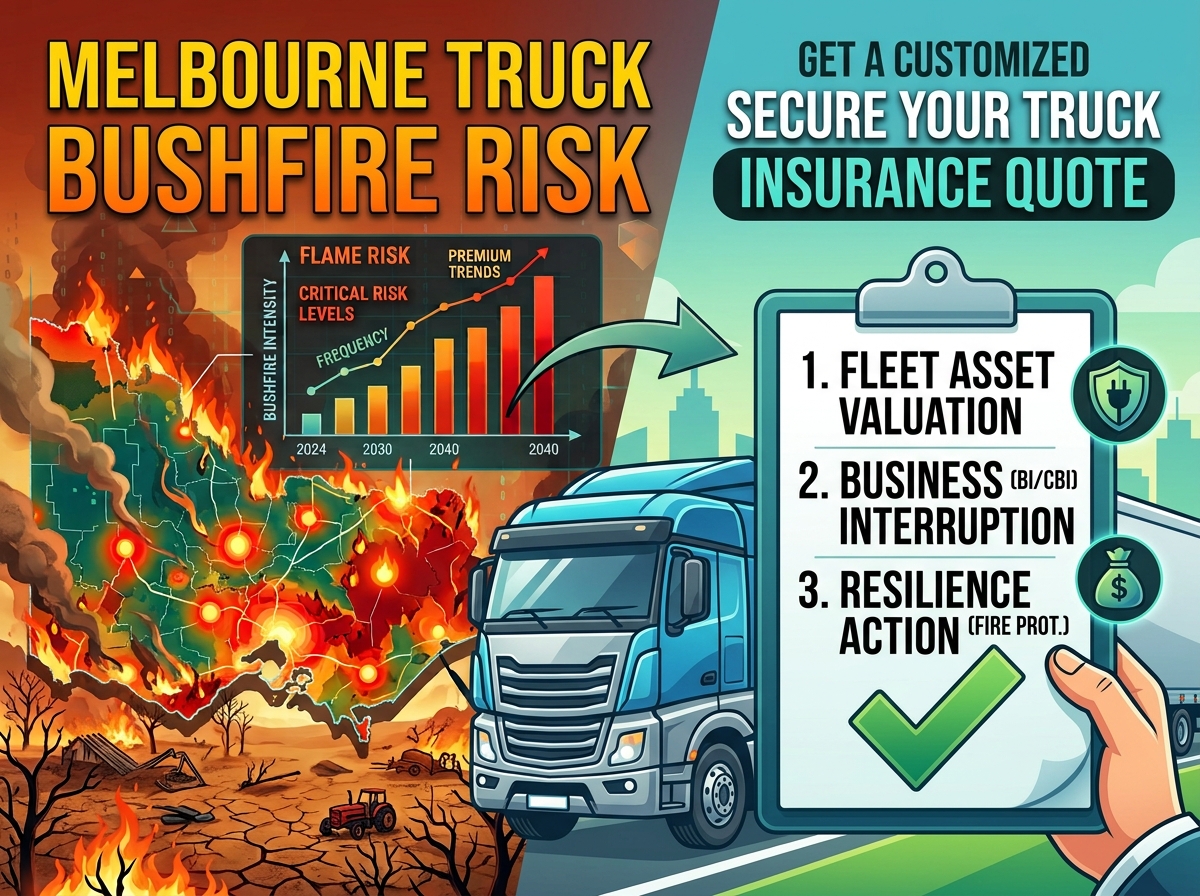
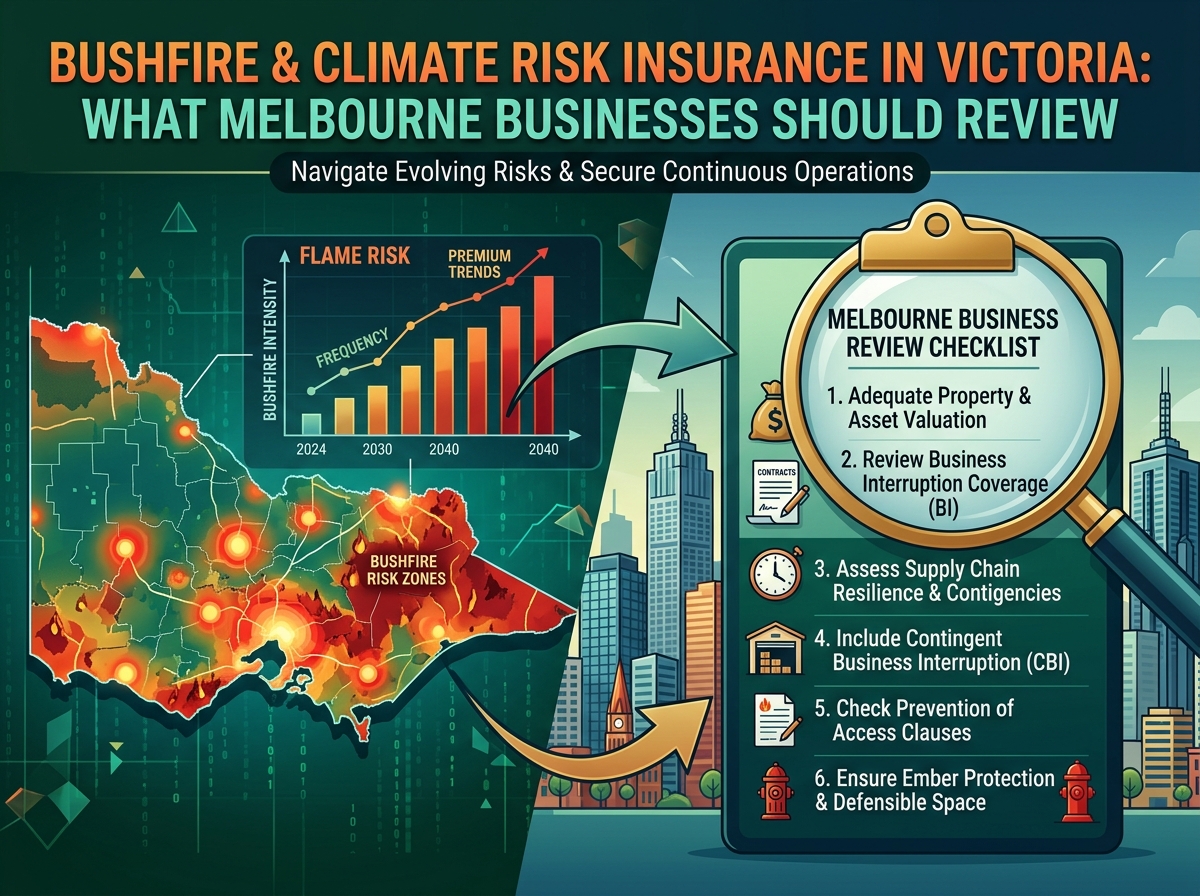
Bushfire & Climate Risk Insurance in Victoria: What Melbourne Businesses Should Review
.png)
Construction Insurance in Australia: What Every Builder, Tradie & Contractor Needs to Know

Cleaning Business Insurance Australia: Public Liability, Tools & Equipment Cover

A General Guide to Cargo & Marine Insurance

Types of Business Insurance: Liability & Directors Cover | Earnest Insurance

Sole Trader Public Liability Insurance | Costs & Cover

Everything You Need to Know About Small Truck Insurance

🏢 Commercial Property Insurance: What It Covers

Cafe & Coffee Shop Insurance

Insurance For Coffee Shops
.jpg)
Building & Construction Insurance Essentials
.jpg)

What you need to consider if you have a licensed venue

Insurance for the transport and logistics sector


What is really inside Business insurance?

Get in Touch
Have questions about insurance? Our expert brokers are here to help.