
Bushfire & Climate Risk Insurance in Victoria: What Melbourne Businesses Should Review
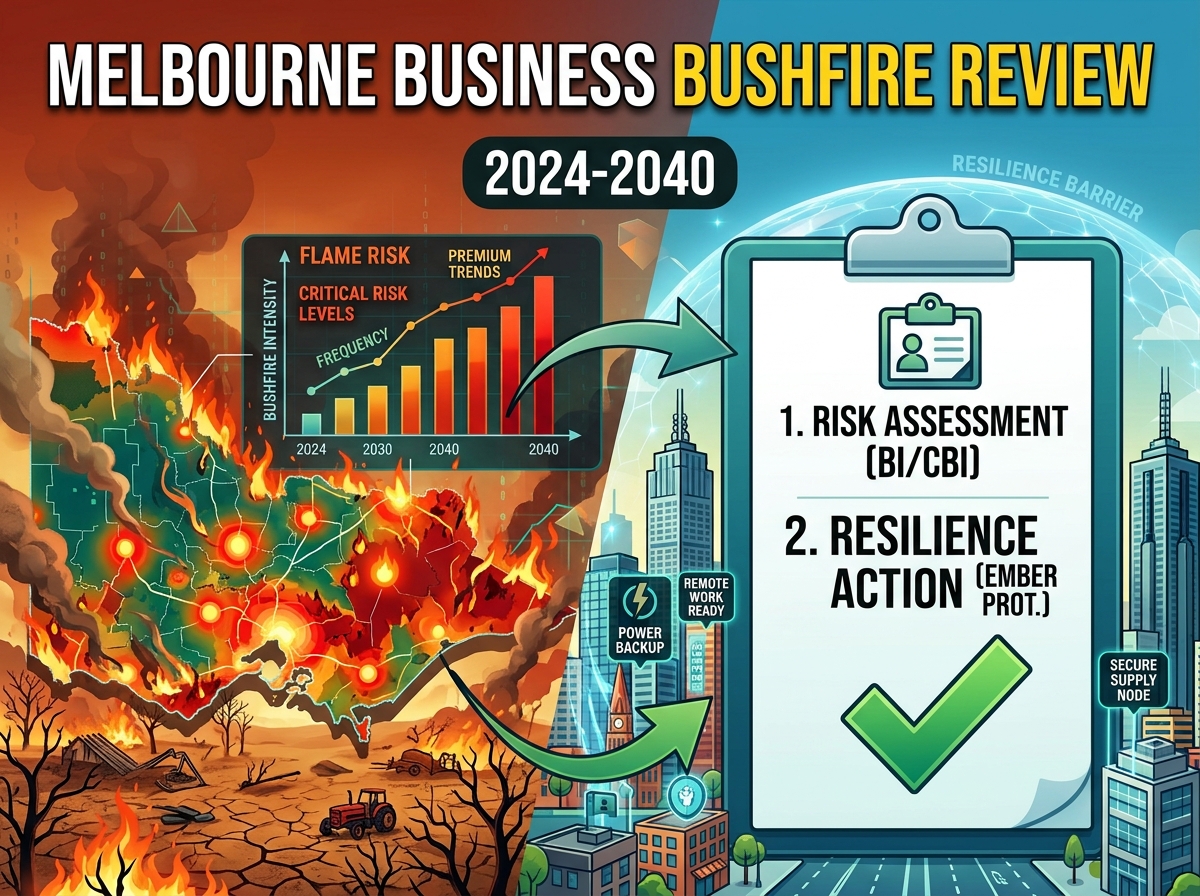
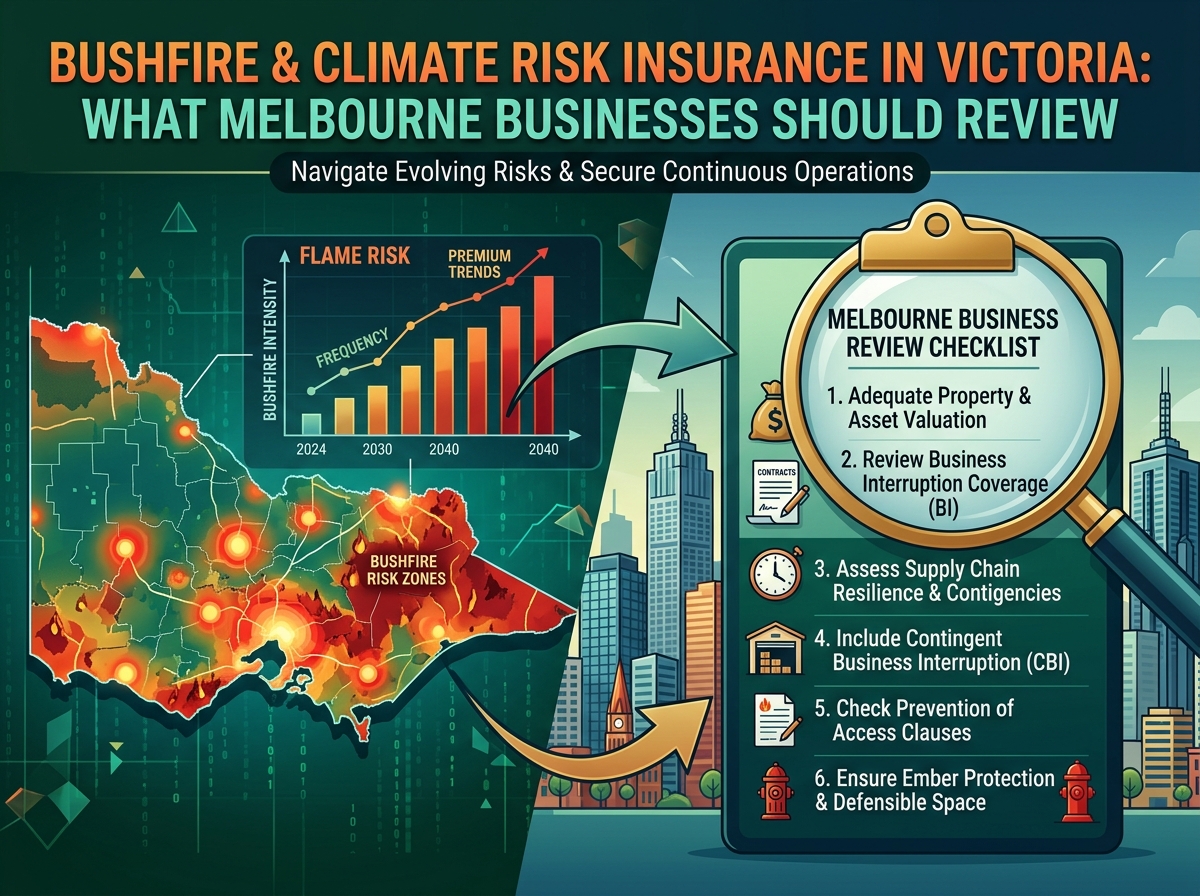
For many Melbourne business owners, insurance is something that gets renewed once a year and then put aside until something goes wrong.
But bushfire risk, extreme weather and the cost of rebuilding are changing the way Australian businesses need to think about insurance.
Victoria has already experienced a significant bushfire event in 2026. The Insurance Council of Australia declared the January 2026 Victorian bushfires an insurance catastrophe after fires affected 18 local government areas. By June 2026, more than 4,700 claims had been lodged across property, commercial and motor insurance, with approximately $598 million in incurred claims recorded.
That does not mean every Melbourne business is facing the same level of risk. Bushfire exposure varies significantly according to location, property characteristics, surrounding vegetation, construction and other factors.
However, it does highlight an important question for business owners:
Is your current business insurance still appropriate for the property, equipment, stock, income and risks your business has today?
For businesses in Melbourne and across Victoria, September is a useful time to review insurance before the warmer months arrive.
Quick Answer: Does My Melbourne Business Need to Review Its Insurance Before Bushfire Season?
Yes, reviewing your insurance before summer can help identify potential gaps between your current cover and your business's actual risks.
A review should consider your:
- Commercial building and premises
- Contents and business equipment
- Stock and inventory
- Machinery and plant
- Business interruption exposure
- Public liability risks
- Vehicles and commercial transport
- Cyber and data risks
- Rebuilding and replacement costs
- Current turnover and operating expenses
- Changes to your business location or operations
Insurance policies are subject to their individual terms, conditions, exclusions, limits and applicable underwriting requirements. A policy review is therefore not simply about checking whether you have insurance; it is about checking whether the insurance remains appropriate for your circumstances.
Why Melbourne Businesses Should Pay Attention to Bushfire and Climate Risk
Bushfires are not limited to remote rural areas.
The Country Fire Authority explains that bushfires can occur in urban bushland areas of Melbourne, particularly where residential and commercial areas meet grassland, trees, reserves or parklands. Areas around places such as Warrandyte, Plenty Gorge, Beaconsfield Upper, Upper Ferntree Gully and Belgrave can face bushfire exposure because of their proximity to bushland.
For businesses, the risk is not necessarily limited to a building catching fire.
A major event can affect operations through:
- Physical damage to buildings
- Damage to machinery and equipment
- Stock loss
- Smoke and ash contamination
- Power or utility interruptions
- Road closures
- Employee access problems
- Supplier disruption
- Customer disruption
- Temporary closure
- Relocation expenses
- Loss of trading income
This is why a broader business insurance Melbourne review can be more useful than looking at property insurance alone.
What Has 2026 Taught Victorian Businesses About Insurance?
The January 2026 Victorian bushfires provide a recent reminder of how large-scale natural disasters can affect both households and businesses.
According to the Insurance Council of Australia, the Victorian bushfires were escalated to a catastrophe declaration in January 2026. By June, approximately 4,850 claims were recorded, with incurred claims of around $598 million and approximately $143 million outstanding at that point.
The numbers are significant, but the practical lesson for a business owner is simpler:
A disaster can create financial consequences long after the physical fire has passed.
A damaged building may need repairs. Equipment may need replacement. Stock may be unavailable. Employees may not be able to work normally. Customers may temporarily disappear. Suppliers may face their own disruptions.
The right insurance structure needs to reflect the way your business actually operates.
What Insurance Should a Melbourne Business Review?
There is no single insurance package that is appropriate for every business.
A café, warehouse, construction company, professional services firm and manufacturing business can have completely different exposures.
However, several areas are worth reviewing.
1. Commercial Property Insurance
If your business owns or occupies commercial premises, consider whether the insured values still reflect the cost of repairing or replacing the property.
Commercial property insurance may be relevant to businesses with:
- Offices
- Warehouses
- Retail premises
- Workshops
- Factories
- Industrial buildings
- Hospitality venues
- Professional offices
- Mixed-use commercial properties
The important issue is making sure the policy reflects the property and the risks involved.
Are Your Building Values Still Accurate?
Construction costs, materials, labour and professional fees can change over time.
If the insured value was established several years ago, it may be worth discussing whether it still reflects the potential cost of rebuilding or repairing the property.
A business insurance review should also consider improvements made since the original policy was arranged.
For example, have you added:
- New plant?
- Solar equipment?
- Security systems?
- Office fit-outs?
- Air-conditioning?
- Machinery?
- Storage facilities?
- Internal renovations?
These changes can affect the value of your assets and your insurance requirements.
2. Business Contents, Equipment and Machinery
A building is only one part of a business.
For many companies, the equipment inside the premises represents a substantial investment.
Think about:
- Computers
- Servers
- Machinery
- Tools
- Furniture
- POS systems
- Refrigeration equipment
- Manufacturing equipment
- Specialist equipment
- Office equipment
- Stock and inventory
A useful question is:
If my premises were seriously damaged tomorrow, how much would it cost to replace everything needed to reopen?
The answer may be very different from the value recorded on an older insurance policy.
3. Business Interruption Insurance
This is an area business owners should understand carefully.
Imagine a fire damages your premises and you cannot trade normally for several months.
The financial problem is no longer limited to repairing the building.
You may still have:
- Rent or property expenses
- Wages
- Loan repayments
- Utilities
- Supplier commitments
- Professional fees
- Marketing costs
- Other fixed overheads
At the same time, your normal revenue may have fallen.
Business interruption insurance can be designed to address certain financial losses resulting from insured events, subject to the policy wording and applicable limits.
The appropriate level and period of cover can depend heavily on the nature of your business.
Why Business Interruption Calculations Matter
A small business may assume that three months of lost income would be manageable.
But recovery does not necessarily end when the physical building is repaired.
You may need additional time to:
- Repair the premises
- Replace equipment
- Rebuild stock
- Reconnect suppliers
- Reopen to customers
- Restore normal sales levels
That is why business owners should discuss their potential recovery period with an insurance professional rather than simply selecting an arbitrary amount.
4. Public Liability Insurance
Bushfire and extreme weather are not the only risks businesses face.
A business may also have legal liability exposures involving customers, visitors, contractors or members of the public.
Public liability insurance may help address certain claims alleging injury or property damage arising from the business, depending on the policy.
For example, businesses such as:
- Retailers
- Cafés
- Restaurants
- Builders
- Tradespeople
- Contractors
- Property businesses
- Event businesses
- Manufacturers
- Hospitality operators
may have different public liability exposures.
The appropriate limit and wording should be considered according to the business's activities.
5. Review Your Business Activities
One of the easiest insurance gaps to overlook is a change in what the business actually does.
Perhaps your business has expanded.
Maybe you now:
- Sell products online
- Import goods
- Store more inventory
- Employ additional staff
- Use contractors
- Operate additional vehicles
- Work at customer premises
- Opened another location
- Added manufacturing activities
- Started offering professional advice
Your insurance should be reviewed when your business changes.
The policy arranged for a business five years ago may not automatically reflect the business you operate today.
How Does Bushfire Risk Affect Commercial Insurance?
Bushfire exposure can be assessed using a range of information, and insurance pricing and availability can vary according to the individual risk.
Recent analysis following the January 2026 Victorian bushfires has highlighted questions about the limitations of relying only on broad postcode-level assessments to understand bushfire vulnerability.
For a business owner, this reinforces the value of discussing the actual property and circumstances rather than assuming that every business within a particular suburb has exactly the same insurance requirements.
Factors that can be relevant include:
- Location
- Surrounding vegetation
- Building construction
- Property use
- Fire protection measures
- Access
- Asset values
- Business activities
- Previous claims
- Policy terms
- Insurer underwriting criteria
Insurance availability, premiums, excesses and conditions can vary according to these and other factors.
What Can Melbourne Businesses Do Before Summer?
Insurance is only one part of risk management.
The CFA provides specific resources for businesses and tourism operators to understand bushfire risks, create fire plans and communicate risks to staff and customers.
Businesses can consider practical steps such as:
Create a Business Bushfire Plan
Your staff should know:
- Who makes emergency decisions
- How the business communicates warnings
- Where important documents are stored
- How customers will be notified
- How employees will be accounted for
- What happens if the premises must close
Protect Important Business Data
Keep appropriate backups of:
- Accounting information
- Customer records
- Supplier information
- Contracts
- Insurance documents
- Payroll information
- Business-critical files
Ideally, critical information should not exist only on computers physically located at the business premises.
Review Emergency Contacts
Maintain current contact details for:
- Insurance broker
- Insurer
- Emergency services
- Property manager
- Key suppliers
- Contractors
- IT provider
- Key employees
Check Your Fire Preparedness
The CFA recommends businesses in high-risk bushfire areas have a business bushfire plan and provides resources specifically designed for businesses.
How Often Should a Business Review Its Insurance?
There is no universal timetable that fits every business.
However, a review is particularly useful when there has been a major change.
Consider contacting your insurance broker when:
- You move premises
- Your turnover increases significantly
- You purchase expensive equipment
- You increase stock levels
- You hire more employees
- You change your business activities
- You purchase vehicles
- You acquire another business
- You undertake renovations
- You sign a major contract
- You begin importing or exporting
- You experience a significant claim
An annual review can also provide an opportunity to check whether the policy continues to reflect the business.
7 Questions to Ask Your Insurance Broker
If you operate a business in Melbourne or Victoria, consider asking your broker:
1. Is my current property sum insured still appropriate?
Ask whether recent construction costs, renovations or improvements could affect the figure.
2. Would my equipment and stock values be sufficient?
Check whether your current asset values reflect today's replacement costs.
3. How would an insured event affect my income?
Discuss business interruption and the assumptions used to calculate the potential loss.
4. Have my business activities changed?
Make sure the insurer understands what your business actually does today.
5. Are there specific bushfire-related conditions or exclusions I should understand?
Read the policy wording and ask your broker to explain anything unclear.
6. What excesses apply?
Understand the excesses applicable to relevant sections of the policy.
7. Are there any gaps between my different policies?
Business insurance can involve several different policies or sections. Reviewing them together can help identify areas that need clarification.
Frequently Asked Questions About Bushfire Insurance for Melbourne Businesses
Does business insurance cover bushfire damage?
It may, depending on the policy. Whether bushfire damage is covered depends on the specific policy wording, insured property, limits, exclusions, conditions and circumstances of the event.
Is bushfire insurance available for businesses in Melbourne?
Insurance options can be available for Melbourne businesses, but terms, pricing, excesses and availability can vary depending on the property's location, risk characteristics and insurer underwriting criteria.
Does commercial property insurance cover business interruption?
Not automatically in every policy. Business interruption is a separate consideration and may be included, optional or subject to particular conditions depending on the insurance arrangement.
How much business insurance does a Melbourne company need?
There is no single amount that applies to every business. The appropriate level can depend on property values, contents, stock, turnover, liability exposure, business interruption requirements and other circumstances.
Can a small business get bushfire-related insurance?
Small businesses can discuss their insurance requirements with a broker. The options available depend on the business, location, activities, property and insurer underwriting requirements.
What should I do if my business is located near bushland?
Start with risk management and preparedness. The CFA recommends businesses in high-risk bushfire areas have a business bushfire plan and provides resources for business operators.
You should also review your commercial insurance arrangements and discuss any specific concerns with your insurance broker.
Final Thoughts: Don't Wait Until a Claim to Review Your Cover
Insurance is most valuable when it is designed around the business you actually operate.
For Melbourne businesses, bushfire risk is one part of a much broader risk picture that can include property damage, business interruption, liability, equipment failure, cyber incidents, theft and other unexpected events.
The January 2026 Victorian bushfires resulted in thousands of insurance claims and hundreds of millions of dollars in incurred claims, demonstrating the scale that a major catastrophe can reach.
At the same time, the CFA continues to emphasise the importance of preparation for businesses operating in areas exposed to bushfire risk.
The goal should not simply be to buy more insurance.
The goal is to understand your risks, understand your policy and make sure the cover you arrange is appropriate for your business circumstances.
If your Melbourne business has changed during the past year, September can be a practical time to review your insurance before the warmer months.
Earnest Insurance can help Melbourne and Victorian businesses explore insurance options across areas such as business insurance, commercial property insurance, public liability insurance, business interruption and other commercial insurance needs, subject to insurer terms, conditions and eligibility.
Quick Business Insurance Review Checklist
Before your next insurance renewal, check:
- Building value
- Contents and equipment
- Stock levels
- Machinery and plant
- Business interruption requirements
- Annual turnover
- Number of employees
- Business activities
- Public liability exposure
- Vehicles
- Recent renovations
- New locations
- New contracts
- Bushfire exposure
- Policy exclusions
- Excesses
- Policy limits
- Emergency plan
- Contact details
Important: This article is general information only and is not personal financial or insurance advice. Insurance products, eligibility, coverage, exclusions, limits, conditions, premiums and claims outcomes depend on the relevant policy wording and individual circumstances. Always review the applicable Product Disclosure Statement and discuss your circumstances with a suitably authorised insurance professional.
Subscribe to our newsletter
Related posts
More Blog Posts
Bushfire & Climate Risk Insurance in Victoria: What Melbourne Businesses Should Review
.png)
Construction Insurance in Australia: What Every Builder, Tradie & Contractor Needs to Know

Cleaning Business Insurance Australia: Public Liability, Tools & Equipment Cover

A General Guide to Cargo & Marine Insurance

Types of Business Insurance: Liability & Directors Cover | Earnest Insurance

Sole Trader Public Liability Insurance | Costs & Cover

Everything You Need to Know About Small Truck Insurance

🏢 Commercial Property Insurance: What It Covers

Cafe & Coffee Shop Insurance

Insurance For Coffee Shops
.jpg)
Building & Construction Insurance Essentials
.jpg)

What you need to consider if you have a licensed venue

Insurance for the transport and logistics sector


What is really inside Business insurance?

Get in Touch
Have questions about insurance? Our expert brokers are here to help.